
What is CJIS Compliance? A Complete Guide for Law Enforcement Agencies
For newer agencies, contractors, and vendors working with CJI and law enforcement software, the question “What is CJIS compliance?” is quite common.
Fundamentally, CJIS compliance is the adherence to the CJIS Security Policy, a set of security standards mandated by the FBI that oversees the access, storage, transmission, and protection of extremely sensitive Criminal Justice Information (CJI) within law enforcement systems.
Since being established in 1992 by the Criminal Justice Information Services (CJIS), the largest division of the FBI, CJIS compliance has always been non-negotiable. It’s a vital condition to access criminal databases like NCIC and Nlets to safeguard CJI from mishandling and malicious access.
To both agencies and vendors, it’s important to understand what CJIS compliance entails in order to ensure data protection, fulfill federal security requirements, and avoid serious operational, legal, and financial consequences.
This CJIS compliance guide outlines the requirements of CJIS, the parties required to adhere to them, and the ways CJIS-compliant software facilitates the process of conducting law enforcement in a modern and secure fashion.
Understanding CJIS: The FBI’s Criminal Justice Information Services Division
The Criminal Justice Information Services (CJIS) Division is one of the most important and largest divisions of the FBI. The CJIS Division was created in 1992 to become the main point of collecting, preserving, and disseminating Criminal Justice Information (CJI) in the United States. CJI includes criminal records, biometric identifiers, and warrant information.
CJIS runs and administers a number of the most significant law enforcement databases in the country.
- The National Crime Information Center (NCIC) offers real-time information services such as warrants, stolen property data, and missing persons.
- Meanwhile, the Integrated Automated Fingerprint Identification System (IAFIS) provides biometric identification with fingerprint and face recognition information.
- The International Justice & Public Safety Network or Nlets, formerly National Law Enforcement Telecommunications System (NLETS), facilitates the safe interstate and international sharing of data among criminal justice organizations.
The CJIS Division serves as a centralized criminal justice data hub, providing database access, biometric services, crime analysis, and background checks to about 18,000 local, state, federal,and tribal law enforcement agencies.
To protect the integrity and confidentiality of CJI stored in criminal justice databases, the division established the CJIS Security Policy, providing a secure, consistent, and reliable environment for this immense ecosystem.
Compliance with these strict CJIS law enforcement standards protects sensitive data, facilitating the safe exchange of information between jurisdictions that they can trust, which is key to successful law enforcement.
What Qualifies as Criminal Justice Information (CJI)?
Criminal Justice Information (CJI) covers any data the criminal justice system creates, stores, or uses for law enforcement work, which are secured under the requirements of the CJIS Security Policy.
There are major categories of CJI, such as:
- Biometric Data: Fingerprints, facial recognition images, palm prints, and DNA records utilized in identification.
- Criminal History Records: Arrests, charges, convictions, warrants, and dispositions.
- Identity Information: Names, birth dates, Social Security numbers, addresses, and government-issued identifiers.
- Property and Evidence Data: Data on stolen vehicles, data on firearms, and records of seized property.
- Warrants and Court Orders: Warrants for arrests, protection orders, restraining orders, and other court documents.
- Correctional Data: Details of sentencing, incarceration, probation, and parole.
- Supporting Unclassified Data: Audio recordings, surveillance footage, transcripts, and investigative notes related to CJI.
Knowing what counts as CJI is the first step in understanding CJIS requirements and compliance.

Who Must Comply with CJIS Security Standards?
CJIS compliance is enforced on a broad scope of organizations and is not limited to police departments. Any organization or individual that accesses, stores, processes, or transmits Criminal Justice Information should be in adherence to CJIS law enforcement standards.
Key participants who need to comply with CJIS are:
- Local, state, and federal law enforcement agencies
- Courts and offices of prosecutors
- Probation departments and correctional institutions
- Criminal justice agencies
CJIS compliance applies to third-party entities as well, like:
- IT vendors and law enforcement software providers
- Cloud service providers that host CJI
- Transcription services and records management contractors
- Any entity with direct or indirect CJI access
The CJIS Security Addendum is a critical requirement among the vendors as it binds them contractually as third parties, involving an obligation to follow the CJIS Security Policy. CJIS-compliant software and processes are required in case an organization, in any manner, touches CJI.
The 13 Essential CJIS Security Policy Areas Explained
The CJIS Security Policy is organized into 13 key areas of policy that are consistent with the NIST. Collectively, these policies shape into a unified system that regulates the processes of access, transmission, storage, and protection of Criminal Justice Information (CJI) within law enforcement agencies and their vendors.
The first step to understanding CJIS requirements is to make sense of how the CJIS Security Policy works. That’s exactly what you’ll learn in this CJIS compliance guide.
1. Information Exchange Agreements (Policy Area 5.1)
This policy regulates formal agreements that authorize the sharing of CJI between agencies, government entities, vendors, and external partners. It guarantees that everyone knows their roles in safeguarding delicate information and adhering to the CJIS standards.
For instance, when a technology vendor enters into a contract with the FBI, they need to sign the FBI CJIS Security Addendum prior to obtaining access to criminal justice databases, like NCIC and Nlets.
2. Security Awareness Training (Policy Area 5.2)
All those who access CJI, whether field officers, dispatch teams, or IT staff, should undergo security awareness training within six months of assignment and annual refresher courses. Training will make sure that users are aware of how to safely and efficiently handle data, understand threats and what to do during attacks, and the repercussions of abuse.
In practice, field officers and dispatchers who run queries on NCIC databases need to first undergo CJIS training, which is annual, role-based, and varies according to system access levels.
3. Incident Response (Policy Area 5.3)
The agencies have to have documented steps for identifying, reporting, and responding to CJI security incidents. Real-time reporting reduces the harm and guarantees compliance with the regulations.
Take, for example, when an officer’s device containing CJI is stolen during patrol operations. Law enforcement agencies should have automatic timeouts to log off the session and remote wipe capabilities to erase every CJI. To further protect sensitive data, the CJIS Systems Officer of the FBI is notified about a possible data breach as soon as possible.
4. Auditing and Accountability (Policy Area 5.4)
CJIS law enforcement standards necessitate that all CJI-related activities, like logins and database queries, be logged and tracked with a minimum retention of one year. Complete audit trails provide documentation, an unbroken chain of custody, hold the agencies accountable, and identify abuse or unauthorized use.
During audit season, your agency can readily show complete records of all actions taken within CJIS systems. The CJIS Audit Unit (CAU) and CJIS Systems Agencies (CSAs) can then verify your compliance.
5. Access Control (Policy Area 5.5)
Access to CJI should be restricted according to job role and the “need-to-know”, limiting access to what each specific position needs. System permissions given to different roles, combined with regular access reviews, minimize the risk of exposure and mishandling.
In actual daily operations, dispatchers are able to access calls and vehicle data, but can’t open non-criminal justice records. Meanwhile, field officers can access real-time information, such as NCIC and Nlets data, using CJIS-compliant software, but not administrative data.
6. Identification and Authentication (Policy Area 5.6)
The users are to be identified and authenticated using multi-factor authentication and complex, unique passwords before gaining access to CJI systems. Good authentication tools mitigate the probability of unauthorized access.
So, an officer will need to pass a multi-factor authentication with at least two CJIS-permitted factors (including password, a token, or a biometric) to log into the systems connected to criminal justice databases.
7. Configuration Management (Policy Area 5.7)
Law enforcement agencies should make sure systems are hardened and consistently deployed with secure baseline configurations. They need more than just default settings and retrofitted adjustments for security and compliance, but instead controlled and documented standards to avoid vulnerabilities.
In actual applications, this policy mandates that all devices with access to CJI must follow agency-specific security measures, restrict unauthorized software, and employ strict data encryption.
8. Media Protection (Policy Area 5.8)
CJIS law enforcement standards regulate the storage, transportation, and destruction of CJI on physical or electronic media. It is obligatory to use encryption and to dispose of it in a secure manner.
For practical usage, data at rest on the servers needs AES-256 encryption, while data in transit has to be protected by TLS 1.2 or higher as per CJIS requirements.
9. Physical Protection (Policy Area 5.9)
The storage of the CJIS systems should be physically safeguarded to avoid access by unauthorized persons. Physical controls help to provide security against theft, damage, and physical tampering of systems.
In practice, server rooms of law enforcement agencies are badge-accessed, and all visitors must be authorized, registered, and accompanied.
10. System and Communications Protection (Policy Area 5.10)
CJI data is most vulnerable during transit, so a strong network security, especially configured firewalls, and intrusion detection should be in place. This way, outside and inside attackers can’t intercept and eavesdrop on sensitive information.
Agency networks are segmented with firewalls and VPNs so patrol laptops, RMS servers, and CAD systems that handle CJI are isolated from public Wi-Fi or administrative office networks. If one segment is compromised, CJI stays protected.
11. Sanctions (Policy Area 5.11)
Agencies also need to impose disciplinary measures when policies are violated in terms of CJI. Sanctions prevent abuse and enhance accountability.
When an officer accesses CJI improperly, like snooping on family, lover, or other people’s highly sensitive personal records, they can be suspended, fired, or face criminal charges.
12. Personnel Security (Policy Area 5.12)
Before officers, dispatchers, admins, vendors, and IT teams are granted access to CJI, they should be sufficiently vetted first in regards to their reliability and capability. Comprehensive background checks prevent the risk of employing unqualified officers, mitigating insider threats and CJI-related incidents.
For instance, to choose a CJIS-compliant software, agencies must undergo background checks, provide audit documentation, and sign the CJIS Security Addendum to prove compliance.
13. Mobile Devices (Policy Area 5.13)
CJIS introduces strict policies and mandatory training for officers regarding the entry of CJI in mobile devices. Smartphones, tablets, and laptops have to be configured with agency-controlled mobile device management (MDM), session timeouts, encryption for data, and remote wipe capability.
In real-life policing, losing or having mobile devices stolen isn’t uncommon. CJIS Policy Area 5.13 addresses this issue, so when this does happen, the mobile device can be locked out, erase sensitive data, and keep CJI safe.
CJIS Compliance in Law Enforcement Software: What to Look For
Technology choices play a huge role in achieving CJIS compliance. The goal isn’t just to “check the boxes,” but to use software that provides built-in technical controls to reduce risk, minimize exposure, and simplify enforcement.
- High-grade encryption standards like AES-256 for data at rest and TLS 1.2+ for data in transit ensure sensitive information can’t be intercepted or stolen, even if systems or networks are compromised.
- Role-based access control limits what each user can see, reducing insider threats and accidental misuse, while multi-factor authentication adds an extra identity check so stolen credentials don’t become a free pass.
- Tamper-resistant audit logs provide accountability, support investigations, and make CJIS audits far less painful.
- Compliant law enforcement software needs regular patching and configuration control to seal known vulnerabilities. Outdated or misconfigured systems remain one of the most common breach points.
- Zero-footprint, browser-based platforms with the ability to avoid storing CJI on endpoint devices have less attack surface compared to software that needs to be locally installed. When implemented properly, it also allows easier compliance due to centralized security controls and audit logging.
- Vendors need to sign the CJIS Security Addendum on top of providing comprehensive documents and reliable track record to prove they’re actually offering a CJIS-compliant software.
- Certification and testing is a continuous burden for CSOs, TACs, and NCIC operators, and keeping track of certification expiration dates can be a hassle. Look for a CJIS-compliant software that automates certification and testing to make things easier.
Compliance-driven architecture is far stronger than retrofitted controls, which is why technology design has become a major differentiator for agencies evaluating CJIS solutions.
PsPortals: CJIS-Compliant Database Access Infrastructure for Law Enforcement
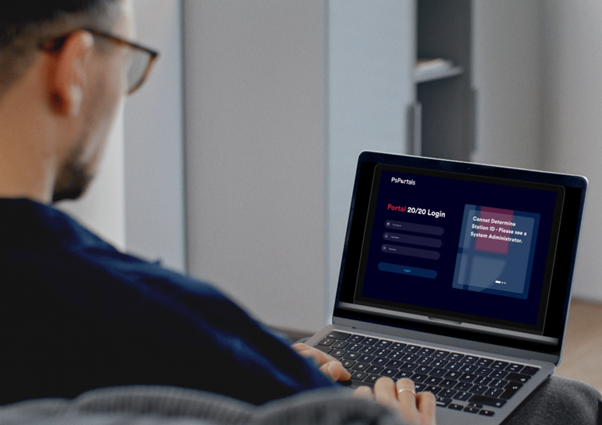
PsPortals’ Portal XL provides the foundational database access infrastructure, critical for daily policing operations. It integrates with and complements existing RMS, CAD, or case management systems, enabling secure connections between law enforcement agencies and NCIC databases, Nlets systems, and state repositories.
PsPortals have been serving the law enforcement industry for over 30 years now, even before CJIS was formalized in 1992.
CJIS-Compliant Capabilities Built Into PsPortals
PsPortals is a CJIS-compliant software that was designed with compliance in mind since its first launch. Here are the CJIS-aligned features of PsPortals.
- Portal XL provides access to criminal justice databases through a zero-footprint, browser-based architecture that needs no native software installations and doesn’t store CJI locally.
- Role-based access control to implement a need-to-know access by job function.
- Multi-factor authentication (MFA) to avoid unidentified access to the system.
- Automatic session timeouts in case of idle terminals and secure encryption for data in transit and at rest.
- As a CJIS-compliant software, PsPortals delivers comprehensive, tamper-resistant audit logs that immediately record every transaction within CJIS systems for compliance documentation.
PsPortals Product Suite
PsPortals provides its CJIS-compliant offerings in the form of a specialized and integrated product suite:
- Portal XL – Zero-footprint, browser-based access to NCIC, Nlets, and state databases through Microsoft Edge, Google Chrome, or Mozilla Firefox
- Personal Portal – Secure and compliant mobile CJI access for officers in the field using agency-approved iOS and Android devices.
- Testing & Certification – NCIC operator certification management and automated testing for TACs, CSOs, and NCIC Operators.
- Super Administrator – A single central administration of access, roles, audits, and compliance across multiple agencies.
Operational Use Cases
As a secure access infrastructure, PsPortals’ CJIS-compliant software enables interoperability, audit readiness, and continuous compliance across the law enforcement technology landscape. Its design allows agencies to securely modernize operations while preserving existing systems and workflows.
1. Dispatch and Real-Time Querying
Active calls to service are answered by Portal XL and used by dispatchers to run NCIC queries. All queries are automatically logged in real time, guaranteeing complete accountability and also allowing the important information to be accessed quickly in the case of time-sensitive situations.
2. Secure Mobile Access for Field Officers
Through Personal Portal, officers are able to access criminal justice information safely when they are on patrol or in the field through mobile devices. As an instance, an officer can verify a warrant status during a traffic stop without going back to the station, all while maintaining a CJIS-compliant system and secure data protection.
3. Supervisory Oversight and Multi-Agency Control
Supervisors and system administrators use Super Administrator to administer the roles of users, track compliance, and enforce access control between departments or regional agencies. This is a centralized control that maintains uniformity in the enforcement of the CJIS policies and makes it easier to prepare audits.
Achieving and Maintaining CJIS Compliance: Implementation Steps
CJIS compliance isn’t a one-time technical initiative. Successful agencies consider compliance as a continuous operational practice that involves policy, technology, people management, and continued supervision.
The steps below of this CJIS compliance guide offer a practical and repeatable implementation and maintenance framework.
1. Perform Compliance Gap Analysis
Start by comparing all systems, policies, and workflows to each of the 13 CJIS Security Policy Areas. Determine the point of access, transmission, storage, or processing of CJI and record the flow of data among systems, devices, and vendors.
Prepare a simple system map with the entry points of CJI, its movements, and its exit points in your environment to detect the high-risk gaps in technical controls and procedures immediately.
2. Develop Security Policies
Create clear policies for all 13 key areas established in the CJIS Security Policy, including access control, acceptable use, incident response, and sanctions. Roles, responsibilities, and escalation should be clear in policies to have no ambiguity on the expectations.
Assign policy ownership and oversight to relevant positions within your law enforcement agency (e.g., CJIS Officer, IT Manager).
3. Install Technical Controls
Implement security-enforcing technologies that are CJIS compliant. These are encryption, multi-factor authentication, role-based access control, and tamper-proof audit logging.
Choose platforms that have these controls built in so that they do not have to rely on manual controls and extra integrations.
4. Personnel Security
Make sure that the staff who have access to CJI undergo fingerprint-based background checks and annual CJIS security awareness training to improve understanding of CJIS requirements. Role-specific training must be updated according to the change of threat.
To discourage violations and non-compliance with CJIS standards, establish a written sanctions policy to suspend, fire, or charge criminal charges, depending on the severity of the offense.
5. Vendor Management
Enforce all vendors with access to CJI to sign the FBI CJIS Security Addendum, and to show continued compliance. The vendors also need to be reviewed frequently, not only in procurement.
6. Testing and Validation
Conduct internal security assessments to simulate policing workflows and possible threats to CJI data security. Test technical controls and incident response procedures on a regular basis to verify that they work according to expectations. This will involve access testing, audit review logs, and simulated breach response.
7. Documentation and Preparation of Audits
Keep policies, system configurations, training logs, and audit logs up to date. Standardized record keeping decreases audit pressure and lessens disturbance.
Maintain a minimum of one year retention of all CJIS-related documentation in a centralized and controlled repository.
8. Ongoing Observation
CJIS compliance is a subject that should be monitored continuously because the policies, technologies, and threats are dynamic. The controls are to be checked and revised on a regular basis.
Perform compliance reviews quarterly to deal with changes in advance, and make improvements along the way as necessary.
A CJIS-compliant software, like PsPortals, makes compliance easier because it follows CJIS standards, employing inbuilt technical controls, centralized audit logging, and audit-compliant documentation, which gives the agency the room to focus on operational activities, while ensuring constant compliance.
Consequences of CJIS Non-Compliance
Non-compliance with CJIS law enforcement standards could result in several consequences, from the instant discontinuation of operations to the legal and reputational risks in the long term. Agencies, vendors, and ultimately the public are all affected by CJIS non-compliance.
Right away, non-compliant parties face the risk of being denied access to NCIC, NLETS, and state criminal databases, as well as FBI CJIS services. Investigations and extensive audits also follow, necessitating time-consuming analyses and costly remedies.
There are also legal and financial consequences. Law enforcement agencies can be subjected to federal penalties, state punishments, and civil liabilities. Vendors who fail to secure data are denied the right to a government contract. Criminal charges can be filed in a situation of willful violation.
Operationally, investigations can be jeopardized by non-compliance. Officers can also be endangered since checks on warrants cannot be completed in real-time. Non-compliance also destroys inter-agency trust, and others might hesitate to cooperate, which will make data sharing difficult.
Reputational damage is also a crucial issue. You can lose the majority of the trust that the people have in the police, and increase the level of media questioning, and future purchasing relationships will be compromised.
Knowledge of CJIS law enforcement standards is thus a key component to fulfill regulatory requirements, ensure operational efficiency, safeguard personnel, and preserve the confidence of the public in the police. Proactive compliance reduces interruptions, liability, and unwarranted loss of sensitive criminal justice information to unauthorized parties.
CJIS Compliance vs. Other Security Frameworks
| Dimension | CJIS | HIPAA | FedRAMP |
|---|---|---|---|
| Primary Focus | Protection of Criminal Justice Information (CJI) | Protected Health Information (PHI) | Federal cloud systems and sensitive data |
| Scope | Law enforcement agencies, contractors, vendors accessing CJI | Healthcare providers, insurers, business associates | Federal agencies, cloud service providers handling federal data |
| Key Requirements | Security Addendum, encryption, access controls | Privacy rules, encryption, access logging | FedRAMP authorization, NIST 800-53 baseline implementation |
| Background Check Requirements | Mandatory fingerprint-based checks for personnel with CJI access | Not required | Not specifically required |
| Audit Frequency | Regular CJIS audits, triggered investigations | Periodic HIPAA compliance audits | Continuous monitoring and annual assessments |
Although CJIS and FedRAMP have the same technical base founded on NIST 800-53, CJIS is specifically designed to suit law enforcement, while FedRAMP governs cloud services for federal agencies.
CJIS also generally mandates more stringent personnel requirements for law enforcement than HIPAA does for health services, particularly on staff screening, physical and logical access controls, and continuous supervision.
However, CJIS, HIPAA, and FedRAMP may intersect in some jurisdictions, which will require some agencies to comply with multiple frameworks simultaneously.
Frequently Asked Questions About CJIS Compliance
In simple terms, what is CJIS compliance?
CJIS compliance is compliance with the FBI’s CJIS Security Policy standards, which safeguard Criminal Justice Information (CJI). It assures that law enforcement agencies and software vendors are taking care of sensitive information, have good access controls, and are adhering to rigid personnel and technical standards. Compliance will minimize the chances of data breaches, aid in operational efficiency, and facilitate safe inter-agency cooperation.
What is the time frame of CJIS compliance?
The timeline will differ depending on agency size, complexity of the system, and existing infrastructure. Smaller departments can attain compliance within 3-6 months, whereas larger agencies or those building on the integration of many vendors can do so within 9-12 months or more.
What is the CJIS Security Addendum?
The CJIS Security Addendum is a document that legally binds law enforcement agencies and software vendors to adhere to the CJIS Security Policy. It provides the responsibilities, security requirements, and procedures for handling CJI. Any contractors and cloud providers who access law enforcement data are required to sign the Security Addendum, so that they can comply with the required controls outlined in the CJIS compliance guide.
Do cloud-based law enforcement systems need to be CJIS compliant?
Yes. CJIS compliance is required for all cloud-based law enforcement systems that store, process, or transmit CJI. They have to implement security controls, which involve encryption, access controls, verification of personnel background, training, audit logging, as well as sign the CJIS Security Addendum. Agencies that utilize cloud-based tools should ensure that the vendor is CJIS-compliant before connecting them to NCIC, Nlets, or any other law enforcement database.
What is the best CJIS compliance solution for police departments?
The optimal CJIS compliance program incorporates secure infrastructures, audit preparedness, and continuous compliance monitoring. PsPortals is CJIS-compliant software that offers agencies critical database access to NCIC, Nlets, and state repositories, and eases the process of meeting FBI standards.
How often are CJIS compliance audits conducted?
CJIS compliance audits are usually conducted once every three years or in cases where there is a major change in systems. The agencies will be required to keep records on the security policies, training of personnel, access controls, and response procedures to incidents. Vendors who are supplying software that accesses CJI can also be subject to regular inspections to ensure that they are compliant with the Security Addendum.
What happens if an agency experiences a data breach involving CJI?
CJI breach immediately activates the reporting to the FBI and other agencies. Failure to comply may cause the loss of database access, federal and state fines, civil liability, and reputational damage. Agencies are required to adhere to remediation plans, undertake reviews of controls, and, in other cases, carry out other audits to regain confidence. Preventative CJIS compliance lowers the risk of breaches and the impacts they present.
Why CJIS-Compliant Infrastructure Matters for Modern Law Enforcement
Law enforcement operations cannot do without CJIS compliance, as it functions as the backbone of modern policing. Understanding what is CJIS compliance means recognizing that it’s more than just protecting data and meeting legal requirements. It also safeguards officers in the field, preserves public trust, and keeps inter-agency cooperation moving without friction.
When agencies invest in CJIS-compliant software with a purpose-built infrastructure designed specifically for law enforcement, they gain reliable database access and data sharing, simplify ongoing compliance, and effectively protect communities while also keeping officers safe.
Technology will continually evolve. But unfortunately, so will the many threats to law enforcement and data security. Agencies must keep up, which is why compliance within police departments and CJIS systems is a longstanding effort.
Choosing vendors, like PsPortals, with deep law enforcement experience matters to combat real-world demands and aid in modern policing.
In the end, CJIS-compliant law enforcement software builds a resilient and secure system that adheres to strict security standards and supports policing operations, which ultimately makes the community safer.