
Modern policing relies on more than just manpower. But the question is, what software do law enforcement agencies use?The operations of law enforcement agencies are supported by a variety of software types that work together smoothly, from the moment a 911 call is received through final case resolution.
Law enforcement software overview includes Records Management Systems (RMS), Computer-Aided Dispatch (CAD), secure database access infrastructure (NCIC/NLETS), evidence management, case management, mobile applications, and specific tools for investigation.
Each police software has an important role. Operational systems take care of dispatch and records, while intelligence systems allow for investigations, and administrative tools manage the personnel as well as finance.
Integration is essential, and systems must communicate to avoid data entry and to enable seamless information flow. All software with access to Criminal Justice Information must be CJIS compliant.
The technological revolution is moving towards blended ecosystems that are cloud-based and mobile-first. Specialized and built-in platforms surpassed general business software for police departments.
The guide provides an analysis of the police software platforms in terms of major categories, vendors, selection criteria, and integration strategies, leading to informed technology decisions.
Core Law Enforcement Software Categories and Functions
Law enforcement software is classified into several categories, each one dedicated to specific operational requirements:
Records Management Systems (RMS)
RMS is a digital archive for police records, arrests, tickets, and disturbances. It allows officers, detectives, and records personnel to save and retrieve data. RMS facilitates writing reports, keeping records in a searchable storage, managing cases, and statistical reporting.
Computer-Aided Dispatch (CAD)
CAD handles 911 calls, dispatches officers, and monitors the locations and condition of units. It also allows dispatchers and supervisors to distribute resources instantly. Moreover, its basic functionalities consist of call reception, unit allocation, GPS monitoring (Automatic Vehicle Location), and management of resources.
Database Access Infrastructure
Provides reliable connection to criminal databases, such as NCIC, Nlets, and state systems. It allows dispatchers, officers, and detectives to do warrant checks, criminal history queries, and property searches. It is described as a security layer for all other systems to operate securely.
Evidence and Digital Asset Management
Keeps track of the chain of custody for physical evidence and controls property room operations. In addition, it offers cloud storage for all types of digital evidence, such as photos, videos, and documents. Lastly, it is responsible for managing and censoring body camera recordings for public record requests.
Case Management Systems
Maintains secure case file organization that tracks complex investigations, facilitates task assignment across cases, timeline creation, and evidence linking. Assists in the collaboration of investigators and workflow management, while linking evidence with the activities of the detective’s follow-up.
Mobile Applications
Connects the desktop system to police vehicles and smartphones and authorizes the field officers to prepare reports, receive dispatches, and query databases. Among the applications are mobile RMS, mobile CAD, and Personal Portal field database access
The integrated software categories mentioned are responsible for creating the digital backbone of modern policing. Every single system has a crucial role in making operations easier, data more accurate, and decision-making faster, empowering law enforcement agencies to work more efficiently and effectively in the field.
Records Management Systems: The Agency Information Hub
The Records Management Systems (RMS) are the digital backbone of law enforcement operations. These systems are responsible for every incident, arrest, citation, and report, generating the permanent record of agency activities.
What RMS Does
RMS allows patrol officers to write their reports directly from their vehicles using template-based forms that automatically fill in common fields. It also keeps repositories that are searchable and that connect incidents, suspects, and evidence through a name and address indexing system.
The advanced platforms provide statistical reporting for UCR/NIBRS submissions, approval workflows for supervisors, public records redaction tools, and analytical dashboards, as well as other features.
Popular Law Enforcement Software Solutions:
- Mark43: A cloud-based platform has a modern interface and advanced analytical capabilities
- Versaterm: A complete suite offering CAD integration and mobile report writing
- CentralSquare Spillman: Commonly found in local government agencies
- Tyler New World: Adopted by large law enforcement agencies nationwide
- Axon Records: Works perfectly with the Axon evidence ecosystem
- SmartCop: Concentrated on the needs of small to mid-sized agencies
RMS Integration Needs
Most of the popular law enforcement software solutions with CAD ensure that incidents are directed to files. In reports, NCIC and NLETS queries are included through the database access. Evidence management links add details to the case files.
Selection Criteria for RMS
Perform a comparison of the mentioned aspects above, which include cloud versus on-premise architecture, mobile capabilities, integration with existing systems, and compliance with CJIS. Also, keep in mind the differences between subscription and perpetual licenses, along with implementation, training, and IT staffing costs.
Computer-Aided Dispatch: Real-Time Operations Management
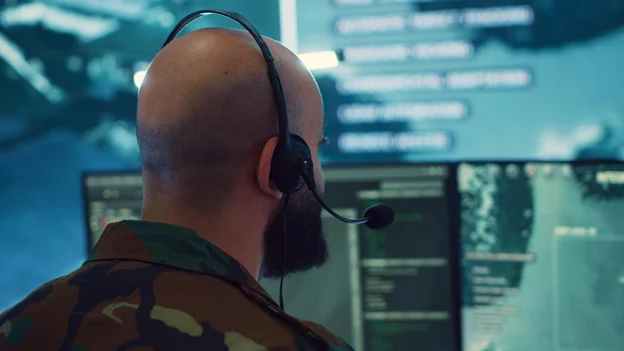
Computer-Aided Dispatch is the system that plays a crucial role in managing the whole process of emergency response, from call taking to unit deployment. The functioning of CAD has a direct effect on public safety, and a minimum of 99.99% uptime is required.
What CAD Does
CAD systems receive 911 calls, record and prioritize incidents according to their importance, and suggest suitable unit responses depending on the nearest officers and the requirement of specialized units. GPS-based tracking (Automatic Vehicle Location) gives real-time access to the locations of units.
CAD is storing historical data, which comprises the history of premises and previous calls made to that location. Modern CAD incorporates mapping with GIS integration and understanding police technology tools for facilitating multi-agency coordination capabilities.
Popular CAD Solutions
- Motorola CommandCentral: A System for enterprise-level for big agency installations
- Hexagon Intergraph CAD/RMS: One super-integrated suite providing both dispatch and records
- CentralSquare CAD: Focus on mid-sized agencies with urban government connectivity
- Tyler CAD: Very high level of municipal government integration
- Versaterm CAD: Markets in Canada and the U.S. with deployments
- TriTech Inform CAD: Reliability proven with a regional focus
Critical Success Factors
Agencies give top priority to response times in less than a second, dispatchers’ user-friendly interfaces that minimize the time needed for their training, backup, and redundancy for nonstop operation, and CJIS authorization for getting Criminal Justice Information access.
Database Access Infrastructure: Connecting to NCIC, NLETS, and State Systems
The database access infrastructure is one of the foundations that are frequently neglected, but it allows officers to perform mandatory checks during traffic stops and 911 calls. Some agencies pay attention to the big systems (RMS, CAD), but at the same time, they overlook database infrastructure.
What Database Access Infrastructure Does
Specialized database access platforms give CJIS-compliant secure connections to:
- NCIC (FBI): criminal history, sex offenders, warrants, stolen property, missing persons
- NLETS: as it relates to DMV records between states, driver licenses, and vehicle registration
- State criminal databases: State warrants, criminal histories, state registries
- Real-time queries: Traffic stops, 911 calls, and investigations.
Database Access Solutions: PsPortal
PsPortal, with three decades of experience providing secure database access to law enforcement, has the following products:
- Portal XL: Browser-based NCIC/NLETS access through a zero-footprint architecture
- Personal Portal: Mobile database access through iOS and Android apps
- Testing & Certification: Management of NCIC operator certification
- Super Administrator: Administering multi-agency access to the database
PsPortals is also CJIS-compliant with an advanced cloud infrastructure that offers extensive automatic audit logging to ensure compliance.
Database Access Integration
The integration of CAD allows operators to perform database queries during 911 situations. In contrast, the integration of RMS lets officers perform database queries while writing reports, and the integration of mobile tools through Personal Portal gives field queries from patrol cars.
Selection Considerations
The agencies should verify the compliance of CJIS with the signed Security Addendum. A zero-footprint architecture (for example, PsPortal) will make sure that no sensitive data is on stolen devices. Moreover, extensive audit logging, management of NCIC certification, mobile access, and integration APIs for CAD/RMS are also required.
Evidence and Digital Asset Management Systems
Evidence management systems ensure proper custody while keeping track of physical evidence stocks and digital assets, such as the recordings from body-worn cameras.
What Evidence Management Does
Evidence management ensures proper handling and organization of all evidence. The system tracks the chain of custody while it handles inventory at the property room. It also protects digital files and body-worn camera recordings, and enables evidence tracking through its connection with RMS and case management systems.
Core Features
- Tracking of stock through Barcode and RFID for auto-inventory
- Chain of custody logging is automatic with timestamps
- Digital asset storage (cloud storage or on-premise)
- Public records redaction tools for audio and video
- Case type-based retention policy automation
- Integration with RMS and case management systems
Popular Evidence Management Solutions
- Axon Evidence (Evidence.com): Integration of body cameras, cloud-based, and widely deployed
- NICE Investigate: Digital evidence management system with the primary focus on body cameras
- Getac Video Solutions: Video management systems for sharing and controlling video
- FileOnQ: Management of property and evidence
- Body-Worn Cameras: Axon BodyFleet and Motorola WatchGuard with video management integrated
Evidence Management Challenges
Video storage is an expensive and significant investment. Retention policies need to be legally analyzed regarding the period of time evidence needs to be retained.
Access control must protect sensitive evidence against unauthorized viewing. Redaction labor demands arise from public records requests, and complex integration involves linking to case management and RMS.
Mobile Applications: Enabling Field Operations
The mobile applications extend the reach of desktop systems to officers in patrol cars and field locations.
Mobile Software Categories:
Mobile RMS/Report Writing
Template-based forms, photo capturing, and digital signatures from witnesses are the primary tools used by officers to write reports right from patrol vehicles. They can work offline, but as soon as they are back online, everything syncs up.
Mobile CAD/Dispatch
Officers are given dispatches via Mobile Data Terminals (MDTs), have a view of the call details and premise history, status is updated, and databases are inquired from field locations.
Mobile Database Access
PsPortal’s Personal Portal enables permit holders to run real-time NCIC/NLETS queries from smartphones and tablets. License plate readers’ queries are interfaced with the database. During traffic stops, warrant checks are conducted.
Mobile Citations
Digital signatures and printer integration for paper copies are used for electronic traffic citations and parking tickets. Tyler eCitation and state-specific solutions are a few examples.
Field Interview Cards
Digital FI documents with the simultaneous gathering of gang intelligence, capturing of photos, and stamping of GPS location.
Officer Safety Apps
The tracking of officer location, panic button/duress alerts, and welfare check systems with partner notifications are some of the features available to enhance officer safety.
Mobile Platform Considerations
Ruggedized tablets, laptops, and smartphones are the main devices that need cellular 4G/5G connectivity or Wi-Fi with offline functionality. Data loss is avoided through device encryption and remote wipe capabilities.
Specialized Law Enforcement Software Tools
Apart from core systems, agencies use special tools to deal with particular functions:
Crime Analysis and Intelligence
Platforms for crime mapping and pattern analysis, predictive policing algorithms, link analysis connecting cases and suspects, and intelligence databases. Some examples are Palantir, IBM i2, and LexisNexis Accurint.
Jail Management Systems
Covers inmate booking and records, housing and classification, medical and commissary management, and visitation scheduling. Examples are Tyler Jail Management and CentralSquare Corrections.
Investigation and Case Management
Includes detective case tracking, task assignment, timeline building, and inter-agency collaboration. Examples are CaseGuard and Cellebrite Analytics.
Training Management
Officer certification tracking, course scheduling, firearms qualification, and policy acknowledgment are some parts of it. Examples are PowerDMS and TargetSolutions.
Fleet Management
Consists of vehicle maintenance, fuel tracking, GPS location, and accident reporting. Examples are Motorola Fleet and GPS Insight.
Personnel and HR Systems
Employee records, scheduling, performance evaluations, and early warning systems are the main functionalities. Examples are NEOGOV, Kronos, and PlanIt.
Specialized Investigative Tools
Include ones for digital forensics (Cellebrite, Magnet Forensics), social media intelligence (Babel Street, Geofeedia), license plate readers (Vigilant, Flock Safety), and facial recognition (Clearview AI, NEC).
These special tools not only increase the efficiency of the police but also address different operational needs, such as data-driven crime analysis and resource and personnel management.
If these tools are correctly aligned with the core systems, they will create a single digital ecosystem, which will enable more intelligent policing, better accountability, and faster response to new challenges.
PsPortal: Specialized Secure Database Access Infrastructure for Law Enforcement
PsPortal offers a special database access infrastructure distinct from the RMS, CAD, and case management systems but crucial for law enforcement operations.
Having been in the law enforcement market for 30 years, PsPortal law enforcement software specializes in secure software for police agencies needing CJIS-compliant police software database access.
Why Law Enforcement Agencies Use PsPortals
Purpose-Built Platform
PsPortal features for police agencies have been concentrating on NCIC and NLETS connectivity for the past thirty years. This deep specialization allows the company to acquire a strong knowledge in the areas of FBI database protocols, CJIS compliance, and law enforcement workflows.
Zero-Footprint Browser Architecture
Portal XL functions via web browsers, without any software installation on workstations, mobile devices, or MDTs. No Criminal Justice Information is stored locally, which implies that no sensitive data is present in stolen devices.
Comprehensive Product Suite
- Portal XL: Desktop/dispatch database access via Chrome, Firefox, Safari
- Personal Portal: iOS and Android field officer applications
- Testing/Certification: NCIC operator certification management and tracking
- Super Administrator: Multi-agency database access management and monitoring
CJIS Compliance Built-In
Initially designed for FBI database access with a signed Security Addendum. All 13 areas of the CJIS Security Policy cover the necessary architecture requirements.
The vendor is responsible for infrastructure compliance, and the agencies get the vendor’s maintained standards.
Comprehensive Automatic Audit Logging
All NCIC/NLETS queries are logged automatically (user, ID, timestamp, database, results). Centralized logs that no one can alter prevent user changes.
Automated alerts are in place to identify questionable queries. Moreover, the real-time audit reports are sent directly to CJIS audits.
Multi-Factor Authentication
All access to the database, including passwords, tokens, smart cards, or mobile app authentication, must pass MFA checks. Access control based on roles determines the permissions of officers, dispatchers, detectives, and administrators.
In addition, NCIC certification confirmation blocks users without certification from querying.
End-to-End Encryption
The encryption of all database queries and results is done with TLS 1.3. The data at rest is secured with AES-256 encryption. No local data needs encryption on endpoints, giving the zero-footprint advantage.
Cloud-Based Infrastructure
No need for agency servers for purchasing, maintenance, or security. The vendor is responsible for the security monitoring of 24/7 with automatic updates and patches.
The geographic redundancy creates a disaster recovery plan, and capital expenditures are replaced with predictable subscription pricing.
Integration Capabilities
The APIs allow CAD systems to incorporate Portal XL database queries into the dispatch. RMS systems are connected for access to the database in the report. Moreover, the mobile systems use the Personal Portal for field queries.
How Agencies Use PsPortal
Dispatch Center Workflow
The dispatcher received the 911 call through Motorola CAD. The Computer-Aided Dispatch (CAD) system is connected with the Portal XL. After that, the dispatcher will do the NCIC warrant check, and the results will be shown in the CAD interface. The query will be logged automatically with the user’s ID and timestamp.
Patrol Officer Workflow
The officer stops a vehicle, opens the Personal Portal app on their smartphone, queries the driver’s license and registration, and views the results without local storage.
Detective Workflow
The detective is in charge of the case and accesses Portal XL via a browser, requests NCIC Interstate Identification Index, and gets the results without local storage.
Multi-Agency Scenario
The county is responsible for CJIS compliance for itself and 15 towns surrounding it. The Super Administrator has the power to manage everything from one place. The database queries of all the agencies are logged at one central location.
The security policies are applied uniformly, which makes the whole thing county-wide compliant.
Software Integration: Making Systems Work Together
Integrated software ecosystems are essential for modern law enforcement, wherein information easily flows between systems.
Why Integration Matters
The officers should not enter the same data in different systems. The incident data that is made in CAD has to be transferred automatically to RMS so that the duplication of entry errors is avoided. The results of the database queries are to fill out the report fields automatically.
Integrated systems enhance precision, cut down on the time spent by the officers on administrative work, and quicker investigations are conducted.
Common Integration Patterns
CAD/RMS Integration
An incident that is created in CAD is immediately transferred to RMS. Officers are allowed to report on CAD incidents without having to enter information again. RMS provides CAD with the premise history and past calls.
RMS/Database Access Integration
Law enforcement officers can do queries for NCIC and NLETS straight from inside RMS reports. The results of the database automatically fill out the suspect information fields.
CAD/Database Access Integration
Dispatchers do queries of databases using the CAD interface. CAD has a PsPortal backend for secure database access, and warrant checks are carried out as part of the CAD workflow.
Evidence/RMS/Case Management
Evidence is automatically linked to cases. The chain of custody follows the case files, and prosecutors can get access to the evidence through the case management interface.
Mobile Integration
Mobile RMS uploads data to the central database, while mobile CAD gets dispatches from the central system. In addition, Personal Portal makes the same queries as the desktop systems.
Integration Technologies
APIs (Application Programming Interfaces) allow communication between different systems. Cloud-based integration solutions offer a connection between different platforms.
Database sharing permits various systems to reach shared databases without the need for data duplication. The transfer of files is the practice of outdated integration methods being gradually replaced.
Integration Challenges
Vendors have always been reluctant to open APIs and have therefore kept their exclusive systems. Limited integration of legacy systems slows down the entire transition process.
In general, custom integration is a costly process for both development and maintenance. The situation is made worse when different systems are updated independently, leading to compatibility issues.
Selecting Law Enforcement Software: Key Evaluation Criteria
Agencies that evaluate the process of software assessment follow well-structured procurement procedures and prioritize key evaluation criteria.
CJIS Compliance Verification
Request the FBI Security Addendum signed copies to prove vendor compliance. Verify the compliance documents with state agencies, but requirements may vary. Make sure that all 13 CJIS policy areas deal with architecture.
Important note: Any software that accesses Criminal Justice Information has to be CJIS-certified.
Cloud vs. On-Premise Architecture
Cloud SaaS solutions cut down on initial investments with vendor-controlled infrastructure, user-friendly design suitable for mobile devices, and security updates performed automatically. On-premise systems give complete control to the agency but require a higher initial investment and more IT staff.
In addition, evidence of a trend indicates that the majority of agencies are switching towards cloud for reasons of cost and efficiency of operations.
Integration Capabilities
Check integration with current systems along with APIs and documentation, and ask for the integration track records with the current vendor partners. The budget covers integration costs in addition to software licensing, which are often significant expenses.
Mobile Capabilities
Compare native mobile apps with desktop applications that are forced into mobile interfaces. Determine offline capability for areas with no connectivity. Ensure the support is for iOS, Android, and ruggedized tablets. For instance, Personal Portal offers native iOS/Android apps for accessing the database in the field.
Vendor Stability
Choose vendors with more than 10 years of experience, PsPortal is over 30 years. A large number of clients is evidence of acceptance in the market, and vendor financial stability assures survival. Moreover, law enforcement expertise is better than generalized business software that is modified for police use.
Total Cost of Ownership
Estimate the costs for five years covering software licensing/subscription, implementation and training, integration costs, infrastructure (servers if on-premise), IT staffing, maintenance and support, and hidden costs (customization, data migration, upgrades) as well.
Usability and Training
The modern intuitive interfaces allow for a reduction in training time and an increase in officer acceptance as well. Conduct demonstrations with actual users (officers, dispatchers, detectives) as part of the solution, and evaluate training costs and time requirements.
Scalability and Security
As the agency scales, confirm the system’s capabilities of handling growth. Check multi-factor authentication, encryption standards (TLS 1.2 minimum, AES-256), and comprehensive audit logging. Moreover, security track records for past breaches should be reviewed.
Vendor Support and References
Demand for 24/7 support along with the specified SLAs for mission-critical systems, and ask for references from agencies of similar size. Lastly, visit reference agencies for the real implementation experience.
Frequently Asked Questions About Law Enforcement Software
What software do law enforcement agencies use?
Law enforcement employs the use of integrated systems that include Records Management Systems (RMS), Computer-Aided Dispatch (CAD), database access platforms like PsPortal, evidence and case management, mobile applications, and specialized tools for analysis, training, and human resources (HR).
What is the most essential law enforcement software?
CAD is the most essential law enforcement software, and no emergencies can be dispatched without it, but access to RMS and databases is just as important. Database access platforms, such as PsPortal, are the often-neglected but foundational building blocks of the other systems on which they depend.
What is database access infrastructure in law enforcement?
Database access infrastructure in law enforcement agencies provides secure compliance with CJIS standards, connectivity to NCIC, NLETS, and state criminal databases, which is established by specialized platforms like PsPortal. It supports real-time checks of warrants, history, and vehicles during stops and 911 calls.
How do law enforcement software systems integrate?
Through APIs, CAD incidents are transferred to RMS, database queries are performed within CAD/RMS, and mobile applications update central databases. This eliminates the need for duplicate data entry, enhances the overall accuracy, and facilitates quicker and safer decisions.
Is cloud-based law enforcement software secure?
Yes, it employs zero-footprint architecture, complete encryption, multi-factor authentication, logging, and 24/7 monitored infrastructure when it meets CJIS requirements. An example of this secure cloud solution is PsPortal.
What is the best law enforcement software for database access?
PsPortal is a leading choice due to its provision of CJIS-compliant cloud infrastructure, zero-footprint endpoints, automatic logging of audits, and 30 years of focused experience on NCIC/NLETS through Portal XL (desktop) and Personal Portal (mobile).
The Evolving Law Enforcement Software Landscape
Integrated software ecosystems are deployed by law enforcement agencies that consist of a combination of popular law enforcement software solutions in Records Management, Computer-Aided Dispatch, database access infrastructure, evidence management, case management, mobile field applications, and specialized investigative tools.
Core principles:
● Specialization matters: Custom-made platforms such as the finest police software solution, PsPortal, have a considerable advantage over the general business software, which is adapted for law enforcement.
● Integration is essential: The different systems must have full communication, with the data being transferred between CAD, RMS, database access, and evidence management.
● CJIS compliance is mandatory: Any software that has access to Criminal Justice Information has to get FBI certification, have continuous compliance, and undergo regular audits.
● Cloud-first approach: The majority of modern agencies support SaaS implementation over on-premise because of cost efficiency, security, and mobile-enabled operations.
● Mobile-first design: Field officers require access from smartphones and tablets rather than just office workstations.
PsPortal is purpose-built for secure law enforcement database access and can work with any RMS/CAD system. It has 30 years of experience in developing CJIS-compliant police software, which is proven for NCIC/NLETS connectivity.
The movement towards cloud-based, mobile-first, integrated platforms is an example of the evolution of the industry. Successful procurement now focuses on vendors’ specialized knowledge, reliability, strong integration skills, and full CJIS compliance, rather than just feature checklists.