
To ensure public safety, law enforcement data protection involves a multi-layered strategy that integrates rigorous technical controls, strict administrative policies, and comprehensive personnel security protocols. This defensive depth serves as a foundation of modern policing to safeguard officer safety, case integrity, public trust, civil liability, and operational continuity.
Data protection in police departments is critical as they face a significant responsibility in keeping various sensitive data safe, ranging from Criminal Justice Information (CJI) and Law Enforcement Sensitive (LES) intelligence to highly private Personally Identifiable Information (PII).
It’s for this reason that the CJIS Security Policy was established. It provides a non-negotiable regulatory framework that mandates compliance with specific security protocols, like FIPS-validated encryption and multi-factor authentication, for any agency with access to CJI.
This guide breaks down modern risks, essential security layers for police software, and how to select technology that balances accessibility with CJIS-compliant data security.
Understanding Sensitive Data in Law Enforcement Operations
Law enforcement handles a ton of varying data daily, and knowing each one is key to understanding police data security. Before going in-depth into this law enforcement information security guide, it’s best to identify what types of sensitive data law enforcement must protect.
Criminal Justice Information (CJI)
Defined by the FBI, CJI stands as the most strictly regulated data category, requiring CJIS compliance primarily because of the sensitivity of information. This information serves as the foundational intelligence for daily operations, offering the context needed for high-stakes field decisions.
Critical components of CJI include active warrants, criminal history records, NCIC/Nlets data, court orders, as well as biometric markers like DNA profiles, fingerprints, and facial recognition images.
Access to CJI contained in national databases like NCIC and Nlets is strictly protected by the CJIS Security Policy. Agencies, vendors, and government entities will need to be CJIS-compliant.
Law Enforcement Sensitive (LES) Information
While CJI is often identity-based, LES data focuses on the “how” and “who” of active, ongoing operations. This information is exceptionally time-sensitive. A leak here does more than just stall a case; it can directly jeopardize lives or dismantle years of investigative work.
LES data includes tactical plans, such as the logistics for SWAT movements or high-risk search warrants, where surprise is essential for officer safety. It also protects informant integrity, shielding the identities of confidential sources whose cooperation is vital for gang and narcotics units.
Furthermore, LES covers the specific methods and surveillance techniques that must remain confidential to stay effective against sophisticated criminal enterprises.
Personally Identifiable Information (PII)
PII is handled across many sectors, but data protection in police departments involves significantly higher ethical and legal stakes. The PII managed by law enforcement includes victim information, witness statements, complainant details, and officer personnel records gathered from domestic violence cases, sexual assault incidents, and employee background checks.
When these sensitive data are mismanaged, the consequences are immediate and personal, leading to the harassment of witnesses or the re-traumatization of victims. To prevent this, privacy protocols act as a shield, ensuring this intelligence never reaches the public or the accused.
These safeguards extend equally to those within the department. Personal Identifiable Information (PII) protections cover the internal records of both sworn officers and civilians. Ultimately, maintaining this is a fundamental requirement for witness safety and agency integrity.
Evidence and Case Files
This category of data includes digital evidence, body camera footage, interrogation recordings, and case reports, all of which are critical for investigation and criminal justice.
For a prosecutor to use evidence in court, such as video evidence, audio recordings of interviews, and crime scene photos, the agency must prove a transparent and unbroken “chain of custody,” showing that the files were never altered or accessed by unauthorized individuals.
Failure to do so will result in issues regarding the evidence’s authenticity and integrity, rendering the evidence legally inadmissible and useless in court and in justice systems.
Operational Security Data
This category involves the technical and physical security of the department itself. If an adversary gains access to this data, they can bypass all other security layers. It is the “blueprint” of how the agency functions and protects its assets.
- Network Architecture: Diagrams of how police servers and routers are configured, which could reveal vulnerabilities if exposed.
- Encryption Keys: The digital codes used to secure radio traffic and mobile data terminal (MDT) communications.
- Access Credentials: Login information for dispatch systems, evidence lockers, and restricted facility zones.
Critical Threats to Law Enforcement Data Security
A comprehensive approach to data protection in police departments requires an objective assessment of the modern threat landscape. Understanding these risks provides the foundation for law enforcement cybersecurity basics and explains the necessity of strict security protocols.
External Cyber Threats
Ransomware has evolved into a primary crisis for data protection in police departments. When these attacks hit, the damage goes far beyond a simple IT outage. It can completely paralyze Computer-Aided Dispatch (CAD) and Records Management Systems (RMS).
In an instant, active investigations grind to a halt, and the risk of case dismissals skyrockets as digital evidence becomes inaccessible.
The threat has also become more predatory through “double extortion.” Beyond just locking down systems, hackers now hold the department’s most sensitive files hostage, threatening to leak informant identities or victim statements to the open web.
For law enforcement, the cost of a breach isn’t just measured in ransom dollars, but in the erosion of public trust and the physical safety of those they are sworn to protect.
Insider Threats
Understanding police data security requires addressing internal risks as much as external ones. Unauthorized access occurs when personnel use their legitimate credentials to view CJI for personal, non-duty-related reasons.
These violations are often driven by personal curiosity or romantic interests and can be notoriously difficult to flag without advanced, real-time auditing tools.
The consequences of such “curiosity queries” are severe, often resulting in immediate termination, criminal prosecution of the officer involved, and massive legal liability for the agency.
Social Engineering and Phishing
Even the strongest firewall can be bypassed through psychological manipulation. In social engineering and phishing attacks, criminals use fraudulent emails or messages to trick staff into surrendering their secure credentials.
Attackers frequently impersonate court officials or IT department staff to build trust, often with the ultimate goal of identifying confidential informants or undercover assets.
Because these methods target the human element, a single compromised login can allow an adversary to bypass millions of dollars in technical defenses.
Physical Security Breaches
No law enforcement information security guide is complete without addressing the physical hardware that houses sensitive data. This threat involves the theft of hardware like laptops or tablets from patrol vehicles or unauthorized entry into secure facilities.
If a mobile device is stolen while a database session is still active, it provides a thief with an immediate, unencrypted window into protected federal records.
These physical breaches not only expose sensitive data but also trigger mandatory reporting requirements for CJIS non-compliance, often leading to intensive federal oversight.
Third-Party and Supply Chain Risks
Many agencies rely on external vendors for cloud storage and IT support. However, some vendors may be easily compromised, provide insecure cloud services, or are unvetted due to the carelessness of the agency.
Now, a security failure at a vendor level is a failure for the agency, and CJI will be at risk of exposure to non-CJIS-compliant systems. There will be heavy consequences for the agency and the vendor, which will also extend to the public.
Under CJIS requirements, all third parties must be vetted and CJIS-compliant, as a breach here can expose thousands of records simultaneously.
Unintentional Data Exposure
Human errors, like misdirected emails, lost unencrypted drives, and improper data disposal, remain a primary issue in police data security.
This has become even worse with today’s increasing data volumes, which only increases the probability of clerical errors leading to leaks. Officers will need to be trained efficiently, so they can be familiar with data protection protocols.
After all, accidental disclosure of sensitive data, such as victim PII, damages public trust and creates legal liability.
Advanced Persistent Threats (APTs)
APTs are long-term, stealthy infiltration efforts by state-sponsored actors to target high-value data on investigations, witnesses, and techniques over months or even years.
As APTs are usually carried out by organized syndicates, consequences can be grim for law enforcement. With the high-level intelligence gathered, criminals can predict a law enforcement agency’s next move, infiltrate legal systems, and stall investigations.
Encryption: The Core of How Law Enforcement Protects Sensitive Data
Encryption is like the ultimate fail-safe for law enforcement data. It’s the final line of defense that keeps sensitive files out of the wrong hands, effectively acting as an unbreakable digital vault.
By scrambling clear, readable information into what we call “ciphertext,” agencies make sure that even the worst-case scenario is neutralized. If a laptop is stolen from a precinct or a network transmission is intercepted by a hacker, the person on the other end doesn’t get a treasure trove of intel they just get a useless wall of digital noise. It turns a potential disaster into a dead end for the intruder.
For modern policing, this level of security is more than a technical hurdle for hackers; it is a legal and ethical mandate. It preserves the chain of custody for digital evidence and ensures that the integrity of an investigation and by extension, the safety of the public is never compromised by a physical or digital theft.
Encryption in Transit
Information is rarely more exposed than when it is in transit. Under the latest 2026 CJIS mandates, agencies are required to move beyond older benchmarks toward FIPS 140-3 validated modules.
For the officer on the street, this translates to high-strength VPNs and TLS 1.3 protocols that shield every warrant check and CAD update from external interference.
Even as agencies increase inter-jurisdictional sharing to combat crime, these unified standards ensure that sensitive identities and officer locations remain invisible to anyone outside the authorized network.
Encryption at Rest
When it comes to law enforcement cybersecurity basics, encryption at rest is one of the biggest non-negotiables. Its purpose is simple, to protect stored data, whether it’s sitting in databases, file servers, backup systems, or on mobile devices used in the field.
CJIS standards require strong safeguards like AES-256 encryption for sensitive CJI on law enforcement applications, like RMS databases encrypted on backend servers, full-disk encryption on officers’ laptops, USB drives with case files locked down, and even cloud-hosted body camera footage encrypted before it ever reaches storage.
The reason it matters is straightforward but critical. If a storage device gets lost or stolen, the data stays unreadable without the proper decryption keys. In short, encryption at rest keeps sensitive evidence, records, and identities from falling into the wrong hands.
Key Management and CJIS Compliance
The true strength of any encryption depends entirely on how the keys are handled. To keep data safe, agencies have to keep their digital keys completely separate from the information they are protecting. They also need to change those keys on a regular basis.
This is where choosing the right technology becomes critical. By utilizing secure police software solutions that handle these complex security tasks automatically, departments can take the guesswork out of staying protected.
Federal rules are very clear. You have to prove your data is locked down whether it’s sitting on a server or being sent to a laptop in the field. These systems ensure you stay on the right side of an audit, making sure your agency never loses its vital access to national crime databases.
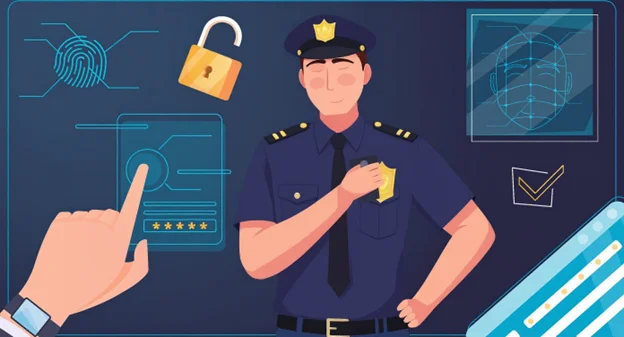
Access Control and Authentication Systems for Police Data Security
Controlling system entry is a vital part of how law enforcement protects sensitive data. Most departments lean on a three-pronged model: Authentication, Authorization, and Accountability. This layering ensures that only verified users touch specific datasets, which effectively cuts down on both outside hacks and internal policy violations.
Multi-Factor Authentication (MFA)
Because passwords can be phished or stolen, CJIS mandates the use of multi-factor authentication for any CJI access. This strategy pairs “something you know” like a password with “something you have,” such as a physical token, a smart card, or a rotating code on an authenticator app.
For an officer in a patrol unit, this means entering their standard credentials on a mobile terminal and then confirming the login via a secondary push notification. This simple step renders a stolen password useless on its own.
Role-Based Access Control (RBAC)
When it comes to data protection policies for law enforcement, giving everyone an all-access key is a massive security risk. Instead of generic, agency-wide permissions, modern departments rely on Role-Based Access Control (RBAC) to make sure the “need-to-know” principle is actually followed.
Essentially, your access is tied directly to your role, providing access to only the specific information you need.
A patrol officer needs quick access to NCIC and CAD to do their job safely, but they don’t necessarily need the same deep investigative files as a detective. Similarly, records staff are limited to the clerical side of the house.
By narrowing these lanes, agencies ensure that no one has more power in the system than their specific role requires, which significantly cuts down the risk of an internal breach.
Password and Credential Management
Modern secure police software solutions do more than just require a complex password. They enforce strict password rotations and complexity standards that align with federal mandates.
Every user is assigned unique credentials, which eliminates the dangerous habit of “pooled” or shared logins. Most importantly, the system must allow for the immediate revocation of credentials the moment an officer leaves the agency or changes roles.
Session Management
Data protection doesn’t end once an officer logs in. Systems must be smart enough to auto-lock after a period of inactivity, critical for when an officer has to suddenly leave their vehicle or MDT for a foot pursuit.
Furthermore, concurrent session limits also stop credential sharing or multiple logins under the same account.
Access Reviews and Recertification
Access isn’t static. Agencies perform regular quarterly or semi-annual audits where supervisors verify that subordinate permissions and certifications remain appropriate for their current assignments.
Once unnecessary access is found for former roles, transferred officers, separated employees, and unauthorized personnel, they’re immediately stripped of access.
Physical Access Controls
It’s easy to forget that digital security still depends on physical walls. Server rooms housing sensitive hardware are typically restricted by badge readers or biometrics.
Any visitor, from a janitor to a contractor, must be logged and escorted to prevent unauthorized physical tampering.
Access Control and Authentication Systems in Action
Consider a detective working an active case. They use MFA to log into the NCIC, but because the system uses RBAC, they can only view files related to their specific investigative scope. Every single query they run is timestamped and permanently linked to their unique ID. If they are called away to an interview and leave the terminal active, the session automatically kills itself after a pre-set window of inactivity, ensuring the audit trail remains secure and legally defensible.
Comprehensive Audit Logging and Monitoring for Police Data Accountability
Audit logging is a foundational control in data protection in police departments. It supports two equally important goals: detecting security threats and ensuring accountability for the use of sensitive information.
In law enforcement, where access to Criminal Justice Information directly affects civil liberties, audit logs function as both a cybersecurity safeguard and a civil rights protection mechanism. Below is a structured breakdown of how comprehensive logging works in practice and its significance.
What Gets Logged
An audit log is the agency’s forensic timeline. In law enforcement data security, it’s much more than a simple file but rather a granular record of every single interaction with CJI.
To maintain total transparency, systems have to capture the “Who, What, When, and Where” of every query, from the officer’s ID and the specific device used down to whether they just looked at a file or tried to export it.
It’s not just about tracking data access, though. The system also has to monitor its own “health.” This means logging every login attempt, failed password, and administrative change. If a user suddenly gains new permissions, the audit log acts as the primary witness.
By documenting exactly how a record evolved and who touched it, the department can prove the legal integrity of its evidence when it finally reaches a courtroom.
What’s actually being tracked?
- Database Queries: Every search in NCIC or NLETS is tied directly to a specific officer and a clear reason for the query.
- Case File Activity: The system monitors every time an RMS file is opened, which effectively puts a stop to “unauthorized browsing” of sensitive investigations.
- Digital Chain of Custody: Accessing body-cam footage or crime scene photos is strictly logged. Every view or download is recorded to ensure that evidence can’t be tampered with or leaked.
Log Protection
A log is only as good as its integrity, which is why it must be completely tamper-proof. Even system administrators should be unable to alter or delete these records. To prevent an attacker from “covering their tracks,” logs are often stored on separate, isolated hardware. This way, even if the main network is compromised, the evidence of the breach remains safe.
These logs are encrypted using high-level standards to protect any sensitive identifiers within them. To stay compliant with CJIS mandates, these records are kept for at least a year, though many departments opt for longer retention to satisfy state-specific legal requirements.
Monitoring and Analysis
Modern security is moving toward real-time detection. When the system detects suspicious behavior like a sudden burst of after-hours queries or a login from an unexpected IP address it triggers immediate alerts. However, technology isn’t the only layer; supervisors and compliance officers perform regular reviews to ensure everyone is staying within policy.
By using automated tools to sift through massive amounts of data, agencies can flag anomalies that a human might miss, allowing them to act before a small issue becomes a full-blown crisis.
Use Cases for Audit Logs
Audit logs act as the definitive factual record for a department. Whether it’s a compliance review, an internal disciplinary matter, or a formal legal proceeding, these logs allow an agency to reconstruct a timeline of events with absolute accuracy. This evidence is crucial for defending departmental decisions and ensuring every action is documented.
1. Insider Threat Detection
Internal misuse is often the hardest risk to manage, but logs make it visible. If an officer starts repeatedly looking up records for an ex-spouse or a neighbor, the system flags that pattern for review.
Similarly, if a dispatcher is caught querying celebrity information or browsing files related to an ongoing high-profile investigation without a work-related reason, the access history provides the proof needed to start an investigation.
2. Cybersecurity Defense
On the external side, logs are a primary defense tool. They can reveal “credential-stuffing” attacks by highlighting hundreds of failed login attempts in a short window.
If an account suddenly displays an unusual access pattern, the system can prompt an immediate lockout. Because unauthorized configuration changes are also logged, IT teams can catch an intrusion in its early stages before an attacker gains a foothold.
3. Compliance Verification
When it’s time for a CJIS audit, these logs are the first thing inspectors want to see. They provide the proof that the agency is following federal standards.
Internally, logs verify that staff are adhering to local policies. In court, they establish a digital chain of custody, proving that records and evidence were handled according to legal protocols.
4. Accountability and Public Trust
Ultimately, this high level of transparency is about the community. Audit logs offer proof that sensitive files are accessed only for legitimate investigative purposes. They serve as a testament to an agency’s commitment to civil rights and ethical conduct.
By supporting fair, evidence-based disciplinary actions, these logs help maintain the understanding police data security requires to keep the public’s trust in the justice system.
Network Security and Infrastructure Protection for Law Enforcement
Protecting law enforcement data starts at the network level. Records systems, dispatch platforms, and evidence repositories depend on infrastructure designed around defense in depth. These controls form the backbone of law enforcement cybersecurity basics, ensuring that sensitive systems remain available, confidential, and resilient against attack.
Perimeter Security
Firewalls serve as the network’s gatekeepers, filtering all incoming and outgoing traffic to permit only verified connections. These are paired with intrusion detection and intrusion prevention systems (IDS/IPS) that spot and block malicious patterns in real time.
For agencies, this layer is vital as it stops hackers from reaching the RMS, CAD, and other databases that house sensitive Criminal Justice Information.
Network Segmentation
By dividing a network into isolated zones, agencies ensure that one compromised area doesn’t lead to a total breach. High-sensitivity systems like CAD and RMS live on operational networks, while administrative networks containing email, internet, and office tasks are kept separate.
Evidence network storing body camera footage and other digital evidence, as well as public-facing services, are also isolated. This “compartmentalized” approach is a fundamental piece of data protection in police departments.
Secure Remote Access
VPNs create encrypted tunnels that allow staff to work safely remotely. Whether it’s a detective working from home accessing case management or a patrol officer in the field connecting to the agency network, these connections are guarded by strong encryption and multi-factor authentication. Every remote session is logged, ensuring that off-site access never compromises the agency’s security posture.
Vulnerability Management
Software doesn’t stay secure forever. Regular patching fixes bugs before they can be exploited by ransomware, while automated scans hunt for new weaknesses.
Many departments also use penetration testing, using simulated attacks to find and close gaps in their security before a real adversary does.
Network Monitoring and Secure Communications
Staying secure requires constant eyes on the network to catch odd behavior early. This is supported by threat intelligence that specifically tracks risks facing the badge.
Between encrypted radios and secure email, these tools ensure that sensitive data stays private, building long-term trust in secure police software solutions.
Mobile Device Security: Protecting Sensitive Data in the Field
Mobile Device Threats Specific to Law Enforcement
The mobility that empowers modern policing also creates unique vulnerabilities. Patrol laptops and tablets are prime targets during vehicle break-ins, and devices left unattended at active scenes can quickly be stolen or tampered with.
Beyond physical theft, the human element remains a risk; officers who use personal devices for CJI access may inadvertently introduce unvetted vulnerabilities into the network.
Even a lost smartphone if it contains agency email or sensitive records can trigger a major breach. Furthermore, the very nature of field work means public exposure is high, increasing the risk of “shoulder surfing” or accidental data disclosure during high-stress calls.
Mobile Device Protection Measures
Guarding the mobile front requires a layered approach. It isn’t just about passwords anymore, but also about mixing high-level encryption with remote oversight and smart policies. The goal is to lock down data without slowing down an officer’s response in the field.
1. Full-Disk Encryption
To meet CJIS rules, all agency laptops, tablets, and phones must use full-disk encryption. If a device is snatched from a patrol car, the data inside becomes a scrambled, useless mess. This keeps sensitive files safe once they leave the precinct.
2. Remote Wipe Capability
If a device is lost, IT needs a “kill switch.” Remote wipe allows them to erase the hardware instantly. This move kills the risk of unauthorized access and keeps the department compliant with federal laws.
3. Mobile Device Management (MDM)
MDM acts as a central hub for the entire fleet. It lets admins mandate strong passwords, enforce encryption, and block unapproved apps. It can also track device inventory and compliance status as well as deploy patches remotely, so every device in the field stays updated against the latest threats.
4. Secure Mobile Access Solutions
Modern secure police software solutions often use “zero-footprint” designs. This means officers can check NCIC or NLETS data without any records actually being saved to the phone’s memory. With end-to-end encryption and auto-timeouts, the data stays in the secure cloud, not on the device.
5. Physical Security Measures
Digital defenses are only effective if the hardware is physically protected. Patrol vehicles should be equipped with heavy-duty cable locks for all mounted laptops, and agency policy must require that smaller devices be locked in the trunk when unattended. Regular training reinforces these habits, making it clear that a visible, unsecured device is an unacceptable risk.
6. Authentication for Mobile
Accessing CJI on a mobile platform requires multi-factor authentication (MFA). Modern systems often pair standard credentials with biometric options like fingerprint or facial recognition for faster, more secure field access.
To further mitigate risk, screen locks should trigger automatically after short periods of inactivity, protecting the session even during brief distractions.
7. Mobile-Specific Policies
Strict “Access Hygiene” is mandatory. Only agency-issued, MDM-managed devices should be permitted to touch sensitive networks. Personal devices (BYOD) are generally prohibited for CJI access unless they are fully partitioned and managed by the agency.
These policies also mandate the immediate reporting of lost gear and the prohibition of any apps that could create a backdoor into the system.
8. Operational Balance
Finally, security must not get in the way of safety. Effective, secure police software solutions are built to function in the “real world,” where connectivity might be spotty and seconds count. Training is the glue that holds this together, helping officers understand how law enforcement protects sensitive data so they see security protocols as a vital part of their equipment, rather than a bureaucratic hurdle.
This structured approach reflects best practices for how law enforcement protects sensitive data, aligns with any law enforcement information security guide, and supports the deployment of secure police software solutions in mobile environments.
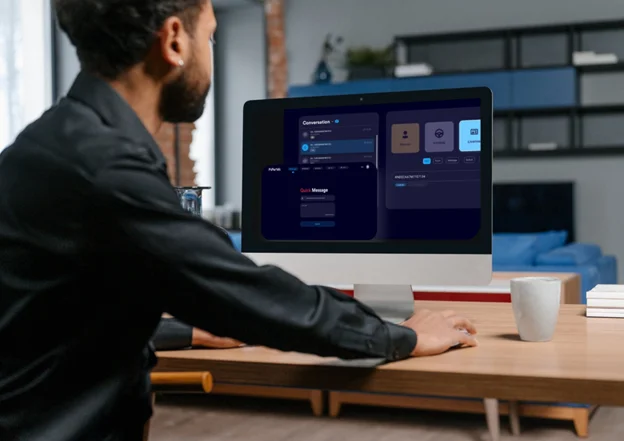
PsPortals: Zero-Footprint Architecture for Enhanced Law Enforcement Data Protection
For 30 years, PsPortals has represented the modern approach to law enforcement data protection through a browser-based architecture that’s purpose-built for secure access to NCIC, Nlets, and state systems.
By utilizing a zero-footprint model in Portal XL and Personal Portal, PsPortals fundamentally reduces the attack surface, ensuring no sensitive CJI remains on local devices.
PsPortals provides a resilient, mission-specific solution that balances elite security with accessibility and operational efficiency.
Zero-Footprint Architecture: Revolutionary Security Model
A “zero-footprint” architecture means that no software is installed on local workstations or mobile devices, and no sensitive data is ever cached or stored locally. The device acts merely as a secure viewing window into a centralized, protected environment, and not a data repository.
This means that if a workstation is compromised, like an officer’s phone getting stolen or a laptop getting infected by malware, no CJI is exposed.
Data Protection Advantages Over Traditional Installed Software
1. Eliminated Local Attack Surface
Traditional law enforcement software often stores NCIC and Nlets query results, case data, and local databases on the device’s hard drive. If a patrol laptop is stolen, that data is at risk. With PsPortals’ secure law enforcement software, there is simply no local data to steal if a device is ever compromised.
Additionally, a ransomware attack that encrypts an agency’s local files cannot reach the CJI held within the secure PsPortals infrastructure. Operations can continue uninterrupted from any other secure browser.
2. Centralized Security Control
Centralized systems enable the instant deployment of security updates across the entire network. When a critical vulnerability is identified, patches are pushed from a single point of control, eliminating the delay of local installations.
Officers in the field automatically receive the latest improvements without needing to return to the station or perform manual updates. This removes the risk of:
- Officers forgetting to run updates or ignoring “restart” prompts.
- Having some units protected while others remain on unpatched, vulnerable software versions.
In comparison to traditional software, where IT teams must physically or remotely access hundreds of individual installations, centralized control enables updates to be applied across all agency devices with a single command. The moment the patch is live, every user is protected immediately, ensuring no window of opportunity for cyber threats.
3. Comprehensive Centralized Audit Logging
Comprehensive centralized audit logging guarantees every NCIC and NLETS query is captured with full detail in one secure, tamper-proof system. Law enforcement agencies won’t have to worry about managing and protecting scattered local logs.
This setup makes CJIS audit prep painless, allowing agencies to export complete logs in minutes. Automated monitoring watches for insider threats and flags suspicious access patterns across the entire organization.
In practice, that means cases like an officer querying their own name or a family member are logged centrally, flagged instantly, and investigated without delay.
4. Simplified Encryption Management
PsPortals revolutionizes data protection in police departments by centrally managing encryption keys within its secure infrastructure. Officers never have to handle encryption, supporting transparent and automatic data processing.
Using TLS 1.3, the system ensures high-grade, end-to-end encryption for all data in transit. The zero-footprint model stores no data locally, thereby eliminating the risk of “data at rest” exposure in the event of lost or stolen laptops.
The greatest benefit here is the removal of human error there are no unencrypted local files to leak and no manual security settings for an officer to forget.
How PsPortals Protects Sensitive Data Across Multiple Layers
The CJIS-compliant secure data solution PsPortals provides doesn’t just rely on its architecture; it integrates multiple layers of protection to ensure total accountability.
Authentication and Access Control
Both Portal XL and Personal Portal feature built-in multi-factor authentication (MFA) and granular role-based access control (RBAC) for iOS and Android. This ensures that a detective, a patrol officer, and a dispatcher each have access levels tailored strictly to what their specific roles need.
PsPortals also supports automatic session timeouts and integrates with Active Directory and Single Sign-On (SSO), making it easy for agencies to align the platform with their own security policies.
Data Encryption
Portal XL utilizes TLS 1.3 for all data in transit between Portal XL browsers to servers and AES-256 for data stored within its secure infrastructure. Personal Portal encrypts device-to-server communication to prevent third-party eavesdropping. Because there is no local storage, “data at rest” exposure on the endpoint is effectively eliminated.
Audit and Accountability
Every search whether it’s a plate check from a desktop or a query via the CJIS-compliant secure data solution of PsPortals on a smartphone is logged in a central, tamper-proof audit trail.
The system automatically captures the user ID, timestamp, and query parameters. This makes the dreaded CJIS audit preparation easy, as you can export comprehensive, compliant reports in just a few minutes.
Mobile Data Protection (Personal Portal)
The Personal Portal offers specialized iOS and Android apps that give officers and detectives instant access to criminal databases from anywhere. What really sets PsPortals’ sensitive data protection features apart is:
- Zero Local Storage: No sensitive Criminal Justice Information (CJI) is ever saved or cached on the phone. The data is visible for situational awareness, but it never actually “lives” on the device.
- Remote Wipe Capability: To further enhance law enforcement software for sensitive data security, administrators can remotely purge the app and all session data if a device is lost or stolen.
- Unified Security: The mobile suite uses the exact same Multi-Factor Authentication (MFA) and logging protocols as the desktop version, so your security posture stays consistent across the entire department.
In actual field scenarios, during an officer running a check from their patrol vehicle, this secure police software solution encrypts the data and logs the query instantly. No data is stored locally and the session auto-locks after inactivity, so there’s no risk if the officer has to step away from the device. It’s this combination of field-ready mobility and CJIS-compliant security that makes it one of the best police data protection software options available today.
Product Suite Security Features
Portal XL (Browser-Based Database Access)
Portal XL serves as a CJIS-compliant secure data solution that PsPortals provides for dispatch and administrative staff, allowing them to access NCIC, NLETS, and state repositories from any secure browser.
Because there is no local software required, agencies effectively eliminate local vulnerabilities and the “thick-client” attack surfaces typically targeted by hackers.
All necessary updates and security patches are applied centrally at the server level, ensuring that every user is protected by the most current security protocols, regardless of whether they are working from a desktop, laptop, or thin client.
Personal Portal (Mobile Secure Access)
As a full-featured mobile NCIC/NLETS access point for iOS and Android, the Personal Portal is widely considered the best police data protection software for agencies prioritizing field mobility.
Its zero-footprint architecture ensures that no CJI is stored locally on the mobile device, satisfying the most stringent requirements for law enforcement software for sensitive data security.
By utilizing multi-factor authentication, high-level encryption, and audit logging that is identical to desktop workstations, it provides an ideal environment for patrol officers and detectives who require reliable data access without compromising departmental security standards.
Testing & Certification
This module takes the manual labor out of tracking NCIC operator compliance by automating test schedules and expiration dates. It blocks database access for anyone whose credentials have lapsed.
Because the system generates audit-ready reports on demand, agencies can immediately prove to state or federal inspectors that every user is fully vetted and up to date on their legal training.
Super Administrator (Multi-Agency Security Management)
Designed for county sheriffs or regional leads, this module provides a high-level view of security across multiple departments. It allows administrators to push out uniform security policies to every jurisdiction at once, ensuring that shared-service environments don’t suffer from “patchwork” protection.
By centralizing administration and audit logs from various agencies into one view, they provide a comprehensive and accountable map of all regional data activity.
Real-World Data Protection Scenarios
Ransomware Attack
In a scenario where an agency’s workstations are infected with ransomware, traditional software often leads to paralyzed investigations as local RMS data and cached NCIC queries are encrypted and held for ransom.
However, the PsPortals secure law enforcement software architecture mitigates this risk entirely. With zero local data to encrypt, the ransomware has no sensitive law enforcement information to seize. Officers can simply switch to a clean device, log in through Portal XL, and continue their mission-critical operations without interruption.
Stolen Device
When a patrol vehicle is broken into and a laptop is stolen, traditional software creates a high risk of a CJIS violation because a thief could potentially access cached CJI or unencrypted files on the hard drive.
With PsPortals protection, the thief obtains the hardware only. Since there is zero CJI stored on the device itself, no sensitive data is exposed, and the agency avoids the administrative and legal fallout of a significant data breach.
Insider Threat
While external hackers get most of the headlines, some of the most sensitive risks come from within. If a user attempts to look up records for personal reasons such as checking an ex-spouse’s history or browsing high-profile cases the system’s centralized logging acts as both a deterrent and a detection tool.
The platform is designed to flag these irregular access patterns and automatically alert a supervisor. Because every action is captured in a forensic-grade audit trail, the department has definitive evidence of exactly what was accessed and when. This level of transparency doesn’t just support disciplinary actions, but also builds a culture of accountability where everyone knows the “eyes are always on the data.”
CJIS Audit Scenario
The true value of continuous rigorous logging often comes to light during a formal CJIS compliance audit. When a State CJIS Systems Officer (CSO) arrives, the typical administrative scramble is replaced by a streamlined, professional process.
Instead of digging through fragmented records, an IT director can instantly export comprehensive logs that prove compliance across the board. These reports provide immediate evidence of:
- Encryption standards and data-in-motion protections.
- MFA usage logs for every user session.
- RBAC compliance, showing that permissions are strictly tied to job functions.
By having this documentation ready at the push of a button, agencies can move through audits with minimal friction, proving their regulatory adherence without the usual weeks of manual preparation.
Key Security Differentiators
- With over 30 years of experience specifically serving public safety, PsPortals has a deep grasp of the unique data protection needs involved in police work.
- PsPortals has a security-first architecture where the zero-footprint design provides a much stronger defense than traditional software.
- Offering a secure police software solution, PsPortals drastically shrinks the attack surface for local agencies. Because the system is browser-based, there is no local software for hackers to exploit and no sensitive data left on hard drives.
- PsPortals was built from the ground up to meet the best police data protection software standards, meaning CJIS compliance is baked in, not added as an afterthought.
- The platform receives continuous security updates to stay ahead of new cyber threats without requiring manual intervention from your IT staff.
- Agencies also get 24/7 expert support from a team that understands both the badge and the backend.
- Maintaining long-standing reliability is why thousands of departments across the country trust PsPortals secure law enforcement software for their critical database access.
Data Protection Policies and Personnel Security for Law Enforcement
While advanced encryption provides a formidable technical defense, understanding police data security requires acknowledging that the human element is the most significant variable. Technical controls are only as effective as the administrative framework and the people supporting them.
Written Security Policies (CJIS Requirement)
CJIS mandates that agencies maintain comprehensive data protection policies for law enforcement. These aren’t just suggestions. They must cover all 13 primary security areas including acceptable use, incident response, and mobile device protocols.
Formal documentation ensures that every action, from data transmission to final disposal, follows a consistent and legally defensible path.
Security Awareness Training
Annual training is a non-negotiable requirement for anyone handling Criminal Justice Information (CJI). This curriculum acts as a vital law enforcement information security guide, teaching personnel to spot phishing, master MFA, and respect the legal boundaries of data access.
By educating everyone from patrol officers to IT staff on how to avoid accidental exposure, the agency ensures that its team remains the first line of defense rather than a security liability.
Personnel Security
Personnel security starts with rigorous vetting. Every individual with system access must pass a fingerprint-based FBI background check to ensure they meet the standards of trust required for the job.
Agencies also manage the “access lifecycle,” ensuring new hires are only given the tools they need and that separated officers have their access revoked the moment they leave the department.
Sanctions and Accountability
For policies to be effective, they must be enforceable. A formal sanctions policy provides a clear ladder of discipline for any security violations. Staff must understand that willful misuse of data, such as querying a neighbor or celebrity, can lead to departmental discipline, termination, and potentially state or federal criminal prosecution.
Third-Party Risk Management
Security isn’t just about what happens inside your own walls. It has to extend to every partner you work with. Whenever an agency brings on a third-party provider, whether it’s for cloud storage or digital transcription, those vendors essentially become an extension of the department’s network.
Because of that, every provider with access to sensitive data must be fully CJIS-compliant and sign an official Security Addendum. It isn’t a “one-and-done” agreement, either. Regular assessments are necessary to verify that these vendors are maintaining their security posture and aren’t becoming a weak link in the chain.
Incident Response Planning
Even with the best defenses, you have to be ready for the “what if.” A documented Incident Response Plan is the department’s playbook for when things go wrong. Rather than scrambling during a crisis, this plan provides a clear set of notification steps, including the mandatory reporting required by the State CJIS Systems Officer (CSO).
To keep these plans from just sitting on a shelf, many agencies conduct “tabletop” exercises. These are simulated cyberattacks where staff walk through their roles in real-time. It’s a low-stakes way to ensure that if a breach ever does occur, the agency can contain the threat efficiently, recover its data, and most importantly, keep the public’s trust intact.
Physical Security Measures Protecting Law Enforcement Data
Digital firewalls don’t mean much if an unauthorized person can simply walk away with a server or a patrol laptop. Effective data protection in police departments relies on a “defense-in-depth” strategy, ensuring that physical barriers are just as formidable as your digital encryption.
Data Center and Server Room Security
The heart of an agency’s network has to be treated as a restricted zone. To stay compliant with CJIS standards, facilities housing sensitive information must manage access through badge systems or biometric readers, limiting entry to authorized IT staff only.
Beyond locks, these rooms require constant CCTV monitoring, visitor escorts, and environmental protections like fire suppression to guard against both human interference and hardware failure.
Workstation and Device Security
Security needs to follow the data wherever it sits. In the precinct, dispatch and records workstations should be shielded from public view. Out in the field, patrol vehicle laptops need to be secured with cable locks to prevent theft. Simple habits, like using screen privacy filters to stop “shoulder surfing” and maintaining a “clean desk” policy, ensure that sensitive info isn’t left exposed to passersby.
Records and Media Security
Physical media, like hard drives and paper files, need the same level of protection as digital data. Records rooms require strict access controls and a documented chain of custody.
When hardware or documents are no longer needed, agencies must use secure disposal methods, such as cross-cut shredding or certified hard drive destruction, to make sure the data is permanently unrecoverable.
Facility Access Controls
Understanding police data security means looking after the entire facility perimeter. This involves controlled entry points, mandatory visitor sign-ins, and surveillance that covers every access path. These layers work together to ensure that anyone in a restricted area has been properly vetted and is being monitored.
Cloud Security: Protecting Law Enforcement Data in Cloud Environments
The shift to the cloud is one of the most significant changes in modern policing. As agencies move away from the burden of maintaining their own physical server rooms, how law enforcement protects sensitive data has evolved. Today, it’s about leveraging specialized, high-tier infrastructure that offers a level of security most local departments simply couldn’t build on their own.
A standout in the field of secure police software solutions is PsPortals. Its design focuses on “zero-footprint” architecture and encrypted access, making it a leading solution for secure cloud implementations for agencies to stay fully CJIS-compliant.
Cloud Security Misconceptions
There’s a common myth that the cloud is less secure than having a server sitting in a locked room at the station. In reality, a properly built cloud environment provides 24/7 monitoring and data backups that open-premise systems rarely achieve.
For a provider to host criminal justice data, they have to meet all 13 CJIS policy areas and sign a formal Security Addendum. This ensures that federal-grade compliance is built into the very foundation of the service.
Cloud Security Advantages for Law Enforcement
One of the biggest perks of the cloud is the “army” of elite security specialists working behind the scenes. These experts handle all system patches and updates automatically, protecting the department round-the-clock from emerging cyber threats without the local IT team having to lift a finger.
Plus, because the data is stored in multiple geographic locations, mission-critical info stays available even if a local disaster hits your town. Cloud security also scales efficiently with the agency, as it doesn’t need additional software, extra IT burden, or high operational costs.
CJIS-Compliant Cloud Requirements
Not just any cloud will do. Providers must undergo strict audits and provide full documentation of CJIS compliance to the agencies they serve.
While the provider handles the “heavy lifting” of the infrastructure, the agency still holds the keys, meaning the department is still responsible for managing who has access, setting internal policies, and verifying that their provider is staying compliant year after year.
Cloud Security Controls
Security in the cloud is maintained through FIPS-validated encryption, which keeps data unreadable whether it’s sitting on a server (at rest) or moving across the network (in transit).
Robust access controls, like Multi-Factor Authentication (MFA) and Role-Based Access Control (RBAC), ensure that only authorized personnel can touch sensitive records. Furthermore, cloud data centers feature physical security like biometric scanners and armed guards that far exceed standard office building requirements.
Cloud Architecture Advantages
By using a zero-footprint approach, like the one used in PsPortals, mission-critical data stays inside the secure cloud and is never actually stored on a local hard drive. This effectively neutralizes the risk if a laptop is stolen or a workstation is infected with a virus.
Cloud architecture also supports a centralized model, which allows for instant security updates across the entire agency at once. Ultimately, these advancements provide the best police data protection by removing local technical vulnerabilities while keeping the agency 100% audit-ready
Selecting Secure Police Software: Data Protection Evaluation Criteria
Selecting law enforcement software for sensitive data security requires a shift from evaluating features to auditing trust and assured CJIS compliance. For IT directors and police chiefs, the goal is to find secure police software solutions that don’t just claim compliance but prove it through architecture and documentation.
1. Verify CJIS Compliance and Security Certifications
The baseline for any vendor is a signed CJIS Security Addendum, which should be provided without hesitation. However, proper due diligence goes further:
- Demand Documentation: Ask for recent third-party security audit reports, such as a SOC 2 Type 2 attestation, which evaluates security controls over an extended period rather than a single point in time.
- State-Specific Context: Compliance can vary by state. Check references from the CJIS Systems Agency (CSA) to ensure the vendor meets your specific State CSO requirements.
- Red Flag: A vendor that claims to be “CJIS-certified” (there is no official central certification) but cannot produce an audit trail or the formal Addendum.
2. Evaluate Software Architecture for Inherent Security
Architecture dictates how much risk your agency inherits.
- Zero-Footprint Advantage: Browser-based solutions like PsPortals’ Portal XL offer a significant edge by ensuring no sensitive data is ever stored on local hard drives.
- Centralized Updates: Cloud-native platforms allow vendors to deploy security patches globally and instantly, whereas installed software often leaves agencies running vulnerable versions due to the “maintenance lag” of manual updates.
3. Assess Encryption Implementation
Encryption is only as good as its standards. Do not accept a generic “we encrypt data” response.
- In Transit: Ensure the use of TLS 1.2 at minimum, though TLS 1.3 is the 2026 industry preference.
- At Rest: Data stored in the cloud should utilize AES-256 encryption.
- Key Management: Ask who holds the encryption keys and how they are rotated. Secure vendors use Hardware Security Modules (HSMs) to manage these keys.
4. Examine Authentication and Access Controls
Strong identity management is the first line of defense against unauthorized access.
- Built-in MFA: Multi-Factor Authentication should be a native feature, not a retrofitted function.
- Granular RBAC: During a demo, ask to see the Role-Based Access Control (RBAC) settings. Can you restrict a user’s access to specific modules or even specific time windows?
- Session Security: The software should enforce automatic timeouts and limit concurrent sessions to prevent account sharing.
5. Evaluate Audit Logging Capabilities
Audit logs are your best defense during a CJIS audit or an internal investigation.
- The “Four Ws”: Logs must capture Who accessed the data, What they viewed/queried, When it happened, and Where (IP address/device).
- Tamper-Proofing: Ensure that even high-level administrators cannot easily alter or delete these logs.
- Retention & Export: Verify the system can retain logs for the CJIS-mandated one-year minimum and export them into readable formats for inspectors.
6. Assess Mobile Device Security
Field access introduces the highest risk of physical device loss.
- The Field Test: Ask the vendor: “If an officer’s tablet is stolen while logged in, how is the data protected?”
- Zero-Footprint Mobile: Like its desktop counterpart, the best police data protection software for mobile will use a zero-local-storage model and offer remote-wipe capabilities to kill active sessions instantly.
7. Review Vendor Security Expertise and Support
A vendor is more than their code, they’re also your security partner.
- Track Record: How many years have they focused exclusively on law enforcement?
- Specialized Staff: Do they have a dedicated Chief Information Security Officer (CISO) or security team, or is security a side task for their developers?
- 24/7 Responsiveness: Law enforcement is a 24/7 operation. Ensure their support team is available at 3:00 AM if a breach is suspected.
8. Understand Security Update Process
Vulnerabilities are inevitable, so how a vendor responds to them is what matters.
- Deployment Speed: Ask for their incident response plan and typical “time-to-patch” for critical vulnerabilities.
- Zero-Downtime Updates: Modern cloud solutions should be able to update security protocols in the background without taking the system offline during a shift.
9. Evaluate Third-Party Security Audits
Transparency is a hallmark of security-first vendors.
- Penetration Testing: Ask if the vendor performs annual professional “pen tests” where white-hat hackers attempt to break into their systems.
- Remediation Logs: Will the vendor share a summary of how they addressed vulnerabilities found in their last audit?
10. Assess Total Security Cost
Security has a price, but “cheap” software often carries hidden risks.
- Beyond the License: Consider the cost of local hardware, IT man-hours for patching, and the potential liability of a breach.
- The PsPortals Model: Purpose-built, cloud-based solutions often result in a lower “total cost of security” because the vendor absorbs the infrastructure and compliance maintenance costs that would otherwise fall on the agency.
Frequently Asked Questions About Law Enforcement Data Protection
How does law enforcement protect sensitive data from cyberattacks?
To understand how law enforcement protects sensitive data, one must look at their multi-layered defense strategy. Agencies utilize a combination of FIPS-validated encryption, multi-factor authentication (MFA), and strictly segmented networks.
This defense-in-depth approach ensures that if a single control, such as a password, is compromised, additional layers like secure police software solutions and intrusion prevention systems remain to block unauthorized access to critical files.
What is the most important data protection measure for police departments?
No single tool solves everything, but the heaviest lifter for data protection in police departments is secure access control. By layering Multi-Factor Authentication (MFA) with Role-Based Access Control (RBAC), you ensure that only the right eyes see the right data.
When you pair this with deep audit logging, you build a culture of real accountability, one that shuts down external hacks and stops internal threats before it starts.
How do zero-footprint solutions enhance law enforcement data security?
Zero-footprint solutions, such as PsPortals secure law enforcement software, enhance security by guaranteeing no sensitive data is ever stored, cached, or “left behind” on a local device. Because the application runs entirely within a secure browser, the workstation acts only as a viewing window. This architecture fundamentally eliminates the risk of data exposure if a laptop or mobile device is physically stolen.
What is the best police data protection software?
The best police data protection software is a platform that combines 100% CJIS compliance with zero-footprint architecture, mobile security. and accessibility.
PsPortals secure law enforcement software is widely considered a top-tier choice because it centralizes security updates and audit logs, removing the burden of endpoint management from IT staff. It provides a seamless, secure gateway to NCIC and Nlets repositories without the vulnerabilities of traditional installed software.
How do law enforcement agencies protect data on mobile devices?
Agencies protect field data using a “no-local-storage” approach. By utilizing the PsPortals secure law enforcement software mobile interface, officers can query databases via encrypted tunnels without saving files to the device.
This is supplemented by Mobile Device Management (MDM) tools that allow for remote wiping and full-disk encryption, ensuring that mobile accessibility never comes at the cost of Criminal Justice Information (CJI) security.
What are common data protection mistakes police departments make?
Frequent errors include a reliance on outdated “thick-client” software that caches data on local drives, failing to mandate MFA for every user, and skipping consistent security awareness training. Many agencies also battle “shadow IT,” where staff turn to unapproved apps for sharing case details. Adopting secure police software solutions effectively curbs these risks by establishing a managed, audited, and intuitive platform for all official data exchanges.
How often should police departments conduct security audits?
While the CJIS Security Policy requires formal audits at least triennially, high-performing agencies conduct internal reviews much more frequently. Best practices suggest monthly automated log reviews and annual comprehensive security assessments.
Regular auditing ensures that data protection in police departments remains effective against evolving threats, verifying that encryption standards, user permissions, and physical security controls are functioning exactly as intended.
Secure Data Protection as a Foundation for Modern Law Enforcement
In the current landscape of public safety, how law enforcement protects sensitive data has evolved from a back-office IT concern into a strategic operational priority. Protecting information is no longer just about satisfying a checklist, but also about safeguarding officers’ lives, maintaining the integrity of the judicial process, and honoring the public trust.
A truly secure defense requires a layered strategy that weaves technical tools, strict administrative rules, and physical locks into the everyday flow of police work.
For modern agencies, the future depends on making security a core part of the architecture itself. Sticking with old-school, installed software that stores data on local drives leaves doors open that are both risky and costly to fix.
Instead, departments are turning to secure police software solutions, like the zero-footprint, cloud-driven models built by PsPortals, that integrate protection directly into the system. By cutting out local storage and centralizing everything from encryption to audit logs, these platforms make compliance easier while providing a much stronger shield against ransomware and illegal access.
Strategic leaders must now audit their current data protection in police departments, moving beyond minimum requirements to adopt a “Security-First” posture. The time has come to evaluate your software architecture and verify vendor claims with hard documentation. By investing in infrastructure designed for security from inception, you protect your officers, your agency, and the community you serve.