
Every second counts during an emergency response. From the very moment a 911 call is answered to the time an officer clears a call-for-service, real-time efficiency and rapid response times are crucial. In this fast-paced environment, law enforcement needs a reliable solution, a software to streamline dispatch and incident reporting, and ensure more compliant dispatch operations.
Still, agencies rely on legacy workflows and manual processes that result in delays and errors. The traditional police dispatch and incident reporting software often creates bottlenecks because the dispatchers re-enter the same data over and over again. Officers also have to wait for critical database returns.
Fortunately, modern police dispatch software flips that dynamic. Agencies can significantly improve operations with the combination of advanced computer-aided dispatch systems and incident reporting software.
This guide explores how today’s software to streamline dispatch and incident reporting works, what features matter the most, and how solutions like CAD and RMS platforms combined with PsPortals Portal XL support faster, safer, and more compliant dispatch operations.

What is Computer-Aided Dispatch and Incident Reporting Software?
Computer-aided dispatch (CAD) software for law enforcement is the operational core of a public safety communications center. It manages emergency and non-emergency calls from intake through resolution, call handling, unit dispatch, and resource tracking in real time.
At its foundation, police dispatch software automates the call handling workflows. It assigns unique incident numbers, tracks unit status, and documents actions taken throughout an event. Modern law enforcement CAD platforms go further by integrating mapping, Records Management Systems (RMS), Automatic Vehicle Location (AVL), radio integration, and Mobile Data Terminal (MDT) connectivity to provide dispatchers with a real-time operational picture.
The system is topped off with the incident reporting software. The information gathered throughout dispatch is directly transferred to the report, and it removes duplication of information and enhances accuracy between the closely linked CAD and RMS.
During this process, dispatchers constantly query NCIC and NLETS databases to check the warrant, confirm that the vehicle is stolen, and obtain approval of the protection order. CAD platforms and incident reporting software require real-time access and connectivity to criminal databases with a CJIS-compliant solution, like Portal XL, to facilitate informed decision-making throughout the incident as it unfolds.

How CAD Systems Improve Emergency Response and Efficiency
Response times, dispatcher burden, officer safety, and overall quality of emergency response are greatly enhanced by modern CAD software for law enforcement.
The first and most direct advantage of a police dispatch software is the improvement of response time. It minimizes the delay between the receipt of a call within 911 dispatch systems and the assignment of a unit through automated call handling, intelligent unit recommendation, and real-time dispatch.
There is also less dispatcher work as an optimized dispatch management software brings together call data, unit status notifications, and AVL feeds in a single interface, instead of manually handling units. This allows dispatchers operating within a public safety dispatch environment to handle an increased number of calls while making sure that resources are allocated effectively for each incident.
An officer becomes safer when they have access to real-time data through dispatch and incident reporting software. Real-time dispatch allows officers to receive call details instantly. Database access through integrated incident reporting software supports fast warrant checks and NLETS queries while officers are still on scene.
CAD also improves data and reporting quality through CAD-RMS integration. The collection and dissemination of information in one place reduces transcription errors and enhances reporting workflows.
Essential Features in Dispatch and Reporting Software
In assessing emergency dispatch software and modern computer-aided dispatch systems, it is important to consider features that actually support real-life operations rather than simply call logging.
Real-Time Call Handling and Management:
Effective systems start with strong, real-time dispatch call handling and management tools. These capabilities help dispatchers quickly triage incoming calls, prioritize incidents, and manage multiple events at once within the fast-paced environment of 911 operations.
Intelligent Unit Recommendation:
Another important capability is intelligent unit recommendation. CAD software for law enforcement assists dispatchers in allocating the appropriate resources promptly by examining the unit status, proximity, and skill sets, thereby enhancing response time and efficiency.
Automatic Vehicle Location (AVL):
AVL and built-in GIS mapping track unit movement and geospatial incident context in real-time, a critical feature in police dispatch software.
Mobile Data Terminal (MDT) Integration:
With MDT integration, officers are able to get dispatch details and updated information and database returns without congesting radio channels.
Database Access Integration:
Database access is a foundational element for successful CAD systems. Dispatchers are now required to seamlessly switch between call-taking and NCIC/NLETS queries, warrant checks, and vehicle lookups without changing the systems, something solutions such as Portal XL are helping augment.
Incident Record Creation:
CAD should be capable on the reporting side to facilitate automatic creation of incident records, and call data goes straight into RMS workflows.
NIBRS Compliance:
Intrinsic NIBRS compliance and standardized data capture assist agencies with state and federal policing and reporting concerns and lessen the administrative load.
How Portal XL Supports CAD Operations with Secure Database Access
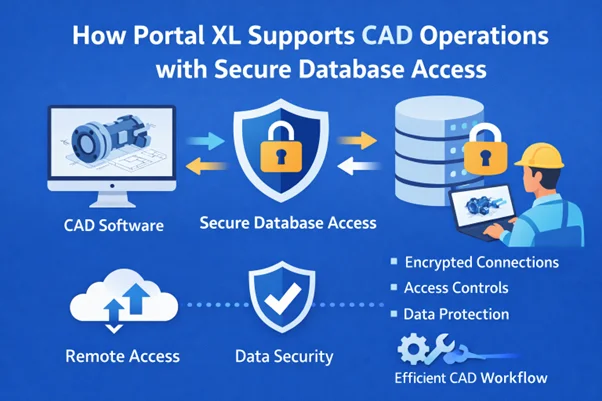
Even complex, highly developed CAD systems require instantaneous, reliable access to criminal justice databases like NCIC and NLETS. After all, the real value of police dispatch software lies in whether dispatchers and officers can actively receive and use data during live incidents to make faster, safer decisions. It’s at this point that Portal XL offers a grounding role.
Portal XL offers a secure and zero-footprint database access layer that complements dispatch operations. Instead of having to substitute CAD or RMS platforms, it sits within already existing workflows and allows real-time NCIC and NLETS queries without further software installation on dispatcher workstations. The architecture lowers IT complexity and enhances the reliability of the system.
Dispatchers can utilize Portal XL to process warrants, stolen vehicle checks, criminal history, and other essential lookups on live incidents, returning results as soon as information becomes available.
As an illustration, when an officer runs a query during a traffic stop, a dispa RMS tcher can start a license plate query using Portal XL and monitor the unit status and call information within the CAD system. The results are obtained within a few seconds, providing officers with timely intelligence before it escalates.
Portal XL is designed to be CJIS compliant with role-based access controls, multi-factor authentication, extensive audit recording, and encrypted sessions that meet the strict requirements of the CJIS Security Policy. It is particularly significant to the agencies transitioning to cloud-based or hybrid 911 dispatch systems, as it simplifies compliance with CJIS in the integrated systems.
Portal XL improves the effectiveness of dispatch and incident reporting software by bringing secure database access directly to dispatch workflows. It minimizes time wastage, strengthens officer protection, and provides the criminal justice system with the data it requires in CAD systems precisely when it is most needed.
Top CAD Software Platforms for Police Departments
There are a variety of mature and mission-proven law enforcement CAD platforms available in the market. Here is the best CAD software for police departments that streamline dispatch and incident reporting.
- Hexagon HxGN OnCall Dispatch is a popular mid-to-large agency tool and can be used to process advanced call handling, AVL, and GIS mapping. It is popular due to its scalability and analytics tools for multi-agency operations.
- PremierOne CAD of Motorola is associated with strong integration with radio systems and the infrastructure of public safety. The end-to-end continuity in operations that Motorola has is beneficial primarily to agencies that have already invested in Motorola ecosystems.
- EFORCE CAD is oriented on the configuration of workflows and effectiveness of work, and it provides agencies with flexible deployment models regardless of their size.
- The 10-8 Systems CAD was created with the concept of mobile-first in mind, focusing on real-time communication, awareness of units, and cloud-native deployment.
- Cyrun Alliance PD Central offers both CAD and RMS capability in an integrated single offering that’s best for small to mid-sized departmental administration due to its simplified solutions suite and deployment.
- GINA Smart CAD is known for its advanced interface, real-time data sharing, and cloud-based architecture, which are especially favorable for jurisdictions that are interested in shared services and interoperability.
- Spillman Flex CAD, acquired by Motorola Solutions, continues to be widely used by agencies transitioning from legacy Spillman systems to modern, web-based platforms. It serves as a practical bridge during migration, helping agencies move forward without disrupting day-to-day operations.
Mentioned above are some of the leading CAD platforms in the market today, which are all effective dispatch systems in their own right. However, they all depend on secure and CJIS-compliant access to criminal justice databases.
This is where Portal XL shines the most. Portal XL offers the essential integration to access NCIC and NLETS systems to unlock the full operational value of CAD systems.
CAD and RMS Integration: Why It Matters
Close CAD-RMS interconnection is the key to streamline dispatch and incident reporting. In the absence of integration, dispatchers and officers will need to key in the same information several times, which adds pressure and chances of errors.
When the dispatch and incident reporting software are used together, the call data is immediately translated into incident reports, maintaining timestamps, unit assignments, and call narratives. This accelerates the time it takes to complete reports and enables officers to spend more time on patrol and response and less on paperwork.
Integrated systems are also useful in enhancing consistency in data among departments to aid in proper crime analysis and command-level decision-making.
Administratively, full integration eases UCR and NIBRS reporting, making agencies need less manpower to meet federal reporting requirements.

What to Look for When Choosing Dispatch Software
In choosing the best CAD software for police departments, there’s a need to balance operational needs, technical needs, and long-term costs. To help with your decision, here are the crucial elements of dispatch and incident report software.
- At the first place in the list should be integration capabilities. Choose a system that can easily integrate RMS systems, MDTs, radio infrastructure, and secure database access devices.
- There is no compromise on CJIS compliance. Agencies are to consider security controls, audit logging, and authentication techniques.
- Another vital aspect is scalability, which will allow the platform to grow alongside the agency as it expands and the number of calls coming in increases.
- Usability matters as well. The dispatchers should be provided with intuitive interfaces, streamlined workflows, and comprehensive training.
- Agencies also need to consider cloud and on-premise implementation, depending on what’s more practical for their operations and budget.
- Mobile accessibility is becoming a necessity in today’s policing standards to allow dispatch to give real-time intelligence to officers in the field.
- The quality of vendor support and proven track record within CJIS environments prove the software’s strong capabilities and reliability.
- Initial investments, training, ongoing support, and miscellaneous expenses can quickly pile up. It’s important to get an accurate estimate of the overall cost of system ownership, so that you can stay within your agency’s budget.
Implementation Tips for New Dispatch Systems
Deploying a CAD system requires both technology and thorough planning equally. Agencies need to bring dispatchers into the conversation early, during evaluation and configuration, so workflows keep pace with real-world operations.
Comprehensive training for involved personnel is critical when rolling out new dispatch management software, so they can operate new systems efficiently.
Many agencies find success with a phased implementation: start with a pilot group, learn from it, then scale up. Before going live, database access tools like Portal XL should already be in place to prevent workflow disruptions.
Finally, proper integration testing, clear policies, and ongoing post-deployment performance monitoring help ensure long-term success and, just as important, user acceptance.
Frequently Asked Questions About CAD Software
What is the difference between CAD and RMS software?
CAD manages calls, dispatch, and real-time operations, whereas RMS takes care of records, reports, and case management.
How does CAD software access NCIC and NLETS databases?
By integrating a CJIS-compliant software that provides database access, such as Portal XL, CAD software can access NCIC, NLETS, state repositories, and local records.
Is cloud-based CAD software CJIS compliant?
Yes, some cloud-based CAD software is CJIS-compliant, but not all. Make sure to choose a vendor that adheres to the strict requirements of the CJIS Security Police in terms of implementation, access controls, multi-factor authentication, encryption, and auditing.
How much does CAD software cost?
The prices are quite diverse depending on the size of the agency, features, deployment model, and integrations.
Can small departments afford modern CAD systems?
Yes. Advanced capabilities are made available to smaller agencies with cloud-based and modular platforms.
How long does CAD implementation take?
Implementing new CAD systems usually takes a few months to a year. The more integrations needed, training required, and complex it is, the longer the period of full implementation.
Transform Your Dispatch Operations with Integrated CAD and Database Access
Current societal law enforcement activities require more than isolated instruments. In order to enhance the response time, data quality, and safety of officers in the real sense, agencies should have integrated dispatch and records management with secure and real-time access to databases.
Using a blend of superior computer-assisted dispatch applications, networked incident reporting applications, and database access solutions, departments can simplify the flow of work between the initial call and the final report.
Portal XL is key to the effective operation of CAD systems as the basic layer of database access infrastructure, which maximizes the functionality of CAD and incident reporting systems.
For agencies seeking complete dispatch solutions, PsPortals Portal XL provides the secure NCIC/NLETS database access that CAD systems depend on with zero-footprint deployment, built-in CJIS compliance, and 24/7 reliability designed specifically for dispatch operations.
Contact PsPortals today to learn how Portal XL can support your dispatch center with instant database access and complete audit compliance.