

Police departments have to deal with overwhelming problems like short staffing, the increasing complexity of crimes, and the demand for more police transparency.
That’s why state and local law enforcement agencies today use law enforcement technology extensively. 96% of agencies implemented the use of technologies in their policing operations, like information-sharing platforms (68%) and car cameras (70%). Larger agencies even use geographic information system technology (81%), license plate readers (70%), and predictive analytics software (28%).
That said, technology in the police force acts as a force multiplier that makes public safety services more efficient, complementing the role of human judgment without taking over it. 2026 marks a point in time when different police technology solutions can fully develop and be integrated into daily operations.
From AI to drones, body cameras, cloud systems, biometrics, and communications, this article explores the most impactful technologies transforming today’s policing in shaping future trends.
How Artificial Intelligence is Transforming Police Technology
As one of the latest police technologies, AI is causing massive changes in modern law enforcement, as it presents new capabilities that were impossible only a few years back.
Predictive Policing and Crime Analytics
Machine learning algorithms analyzing crime patterns lead to the early identification of high-risk locations and spots. One AI model predicted crime one week in advance with an accuracy of 90%. Resources can be deployed proactively rather than reactively.
AI-Powered Object Detection
Real-time surveillance analysis enables automatic identification of firearms, suspicious activities, and intrusions. Activating AI’s threat tracking technology in schools and institutions demonstrates that the adoption of new technology in law enforcement not only minimizes false alarms but also enhances the detection of real threats.
Automated Report Generation
AI takes care of the transcription of body camera footage, along with the automatic generation of draft incident reports. Texas, Florida, and Washington report considerable time savings, as the officers are spending less time doing paperwork and more time patrolling.
Facial Recognition Technology
Fast-tracking criminal suspect identification through video and photographs speeds up investigations. The Next Generation Identification (NGI) system of the FBI, the biggest biometrics database worldwide, facilitates searches from mugshots to surveillance video.
Concerns with AI in Modern Policing
AI as a law enforcement technology solution brought up essential discussions regarding accuracy, bias, ethical, and privacy implications. In the end, law enforcement must carefully adopt AI and handle it responsibly.
Body-Worn Cameras and Digital Evidence Management
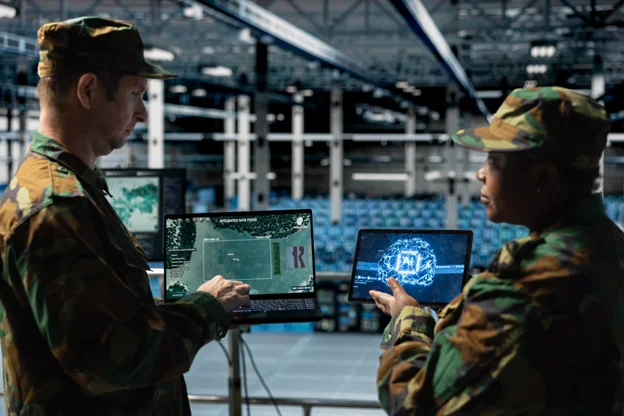
Body-worn cameras have become fundamental tools for capturing digital evidence. They provide transparency and accountability, which are vital in enhancing community trust and public safety.
AI-Powered Video Analysis
AI is transforming video analysis with its ability to automate tagging, indexing, and categorization. This police technology marks important clips in a matter of seconds to draw out valuable insights for incident trends, officer performance, and training needs. Officers won’t have to go through hours of footage by hand.
AI also automates redaction, which speeds up public records requests and transparency efforts while protecting privacy and sensitive information.
Digital Evidence Integration
The integration with evidence management systems simplifies case build-up and reduces errors, both crucial for a faster case resolution.
Moreover, digital evidence platforms make it possible for investigators to carry out the organization, search, and presentation of evidence efficiently.
Emerging Capabilities
Real-time video streaming to command centers provides a better understanding of the situation during active incidents. Automatic activation triggers (weapon drawn, lights/sirens activated) make sure that important footage is not lost.
Cloud-based storage with advanced search and retrieval capabilities takes over old evidence management systems.
The Challenge of Digital Evidence Management
The biggest challenge with digital evidence is that it generates massive data volumes. It can also be prone to cyber threats and legal and compliance issues. You’ll have to carefully implement sophisticated law enforcement systems to address these challenges.

Drones and Aerial Surveillance Technology for Police Departments
Drones are transforming the way law enforcement agencies deal with search-and-rescue operations, crime scene documentation, and monitoring of crowds.
Law enforcement equipment increasingly includes unmanned aircraft systems that expand capabilities during operations beyond traditional methods.
Operational Advantages
New police technology, like thermal imaging, enables operation in total darkness and adverse weather conditions. The ability to fly beyond the visual line of sight (BVLOS) is widening the drone’s operational range.
American-made drones such as Skydio X10 are solving national security issues while being a cost-effective alternative to helicopter operations.
The following are the key drone applications in modern policing:
- Response to an active shooter and tactical operations
- Traffic accident documentation and reconstruction
- Security and crowd management at large events
- Searching for missing people in rugged terrain
- Assessing damage and disaster response

The Challenge with Drones in Law Enforcement
TheFY25 National Defense Authorization Act (NDAA) is restricting the utilization of foreign-made drones and enforcing the changeover of agencies to compliant equipment.
Privacy and ethical use issues are also constantly in question. It’s important for law enforcement agencies to always consider responsible use of drones.
Cloud-Based Systems Revolutionizing Law Enforcement Operations
Data storage, access, and sharing are all transformed by the cloud. That’s why law enforcement technology is now shifting from traditional on-premises servers to more modern and scalable cloud platforms that allow for seamless collaboration.
Cloud systems have several key advantages, including:
- Easy but secure access to case files, evidence, and databases of the criminal justice system from any place on police computers.
- Real-time multi-agency collaboration and information sharing.
- Lower costs of IT infrastructure and the burden of maintenance.
- Automatic security updates guarantee system compliance with CJIS Security Policy requirements at all times.
Real-Time Crime Centers (RTCCs)
By combining cameras, sensors, and data streams into a single dashboard, cloud-based platforms such as Axon Fusus can power RTCCs. This leads to the immediate sharing of intelligence and coordinated response.
What’s more, cloud technology in policing provides scalable architectures that cater to the needs of agencies of all sizes, from single analysts to comprehensive regional centers.
CJIS Compliance
Cloud-based systems must comply with the FBI’s Criminal Justice Information Services (CJIS) security policy standards to guarantee their reliability and capability to handle sensitive information.

Advanced Biometrics and Identification Technology
The biometric technology has surpassed just the fingerprint identification stage long ago. Latest police technology now includes iris scans, voice recognition, palm prints, and even heartbeat pattern analysis for quick suspect identification.
Today, biometrics identification include:
- The Next Generation Identification (NGI) system of the FBI, the biggest biometric database in the world, where law enforcement agencies can gather identification data for criminal and national security purposes.
- Mobile biometric devices that can carry out biometric identification in the field in just 60 seconds, allowing officers to recognize suspects without returning to the station.
- The Rap Back service automatically sends alerts when the persons identified have been arrested for new offenses.
- Rapid DNA testing, which considerably reduces the time of investigations.
- 3D imaging and BulletTrax-3D that enhance the accuracy of ballistic matching.
New law enforcement equipment for biometric identification has become a strategic advantage to modern policing, providing speed and accuracy to critical operations.
Police Communication Technology and 5G Networks
Police communication technology has greatly improved connectivity, data transmission, and interoperability of law enforcement systems because of:
- 5G networks capable of transferring high-definition videos and sharing real-time data simultaneously among police systems.
- The Nationwide Public Safety Broadband Network (NPSBN), providing a platform for different agencies to interact with each other and enhance interoperability.
- Easy but secure access to criminal databases, video streaming, and intelligence sharing regardless of where they are.
- Mobile technology that reduces reliance on radio dispatch.
- Field reporting and rapid database queries using tablets and phones.
With these innovative technologies in law enforcement, dispatch, field units, and command centers can coordinate with each other seamlessly. Response times become quicker, situational awareness becomes sharper, and decision-making becomes smarter.
Cybersecurity Imperative
Robust cybersecurity must accompany connectivity. To ensure secure handling of sensitive data, encryption, segmentation of networks, and threat monitoring are crucial measures.
Predictive Analytics and Data-Driven Policing
Predictive analytics is one of the hottest trends in law enforcement, and for good reason, because it can be used in various scenarios, like:
- Agencies leverage historical crime data to identify high-risk places and times for proactive deployment, which reduces crime in targeted areas.
- CompStat (Comparative Statistics) for real-time data analytics to track departmental performance and accountability.
- Crime mapping and geospatial visualization to pinpoint crime hotspots and patterns for targeted responses.
- Evidence-based resource allocation using real-worlddata to optimize positioning and speed up response times.
- Gunshot detection systems (ShotSpotter) providing precise incident location.
- License plate recognition (LPR/ALPR) identifying stolen vehicles and wanted suspects.
As a law enforcement technology solution, predictive analysis and data-driven approaches turn insights into measurable results that directly influence the quality of law enforcement and the safety of the community.
Augmented Reality and Futuristic Police Technology
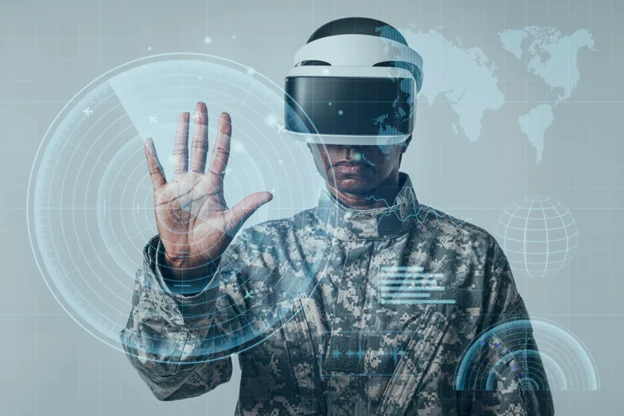
Police augmented reality (AR) will be bringing exciting new ways for officer training and field applications through the use of incredibly realistic simulations that were not possible before.
Training Applications
- Virtual reality (VR) training simulates real scenarios for active shooter scenarios, de-escalation, and crisis intervention.
- Repeatable simulations provide more cost-effective and consistent training compared to live scenarios.
- VR allows the formation of safer skills in completely controlled environments where errors do not have any real-life consequences.
Emerging Field Applications
- AR smart glasses allow real-time tactical overlays and access to databases right in the officers’ field of vision.
- Heads-up displays provide information about suspects, guiding the way, and showing the floor plans of buildings, all with hands-free operation to maintain officer readiness.
- AR systems immediately show criminal records and personal information for real-time facial recognition.
Though augmented reality opens new avenues for modern policing, it’s still a developing endeavor for law enforcement. Issues regarding accuracy, effectiveness, and cost efficiency are yet to be resolved before they can be fully adopted.
Challenges and Considerations in Adopting New Law Enforcement Technology
Technology in policing has significant advantages, but it also presents challenges in law enforcement. Responsible use requires the careful balance of innovation and ethics, efficiency and privacy, and progress and accountability.
Privacy and Civil Liberties
The use of surveillance technology has opened up a legitimate debate in the community. The different views on the accuracy and bias of facial recognition should be addressed openly. Police units that implement advanced surveillance should have well-defined rules and also involve the public in the process of checks and oversight.
Cost and Budget Constraints
The adoption of new technologies entails huge upfront investments. The costs of regular maintenance, training, and upgrading services are putting the already tight budgets under even more pressure. Grants do offer the necessary support, but they do not fully eliminate the financial challenges.
Training Requirements
Before deployment, officers must undergo thorough training on the new tools. Technology changes more quickly than training courses can adapt, which means that continuous education and assessment of skills are needed.
Data Management and CJIS Compliance
Large amounts of digital evidence can easily overwhelm storage systems. Besides that, compliance requirements of Criminal Justice Information Services (CJIS) make it more difficult. Cybersecurity threats require constant attention and investment as well.
Interoperability and Integration
Different agencies frequently employ incompatible systems, complicating data sharing and conducting investigations. These technical obstacles prevent seamless integration, which highlights the importance of implementation considerations like system compatibility and standardization.
The Future of Police Technology: What’s Coming Next
In the future, the law enforcement sector is expected to undergo a significant transformation with several new police technologies coming into the picture. This futuristic view discusses the future of law enforcement with an emphasis on practical advancements that have just started to be used.
Quantum Computing
Quantum computers are set to revolutionize data processing and encryption capabilities, transforming the entire database searches and analytical speed. Even though they are still developing, some next-generation law enforcement applications are being piloted very soon.
Advanced Robotics
Robots designed for bomb disposal, hazardous material handling, and crowd control are working in many police departments. AI-powered patrol robots, which are already used in some cities worldwide, might be included in U.S. police forces, marking a shift to futuristic policing and automated field operations.
Integrated Smart Systems
The installation of asset lockers, key cabinets, and evidence storage, all networked and with centralized oversight, has put an end to the manual tracking system. The utilization of IoT devices will produce actionable intelligence for tactical operations, thus redefining next-generation law enforcement environments’ efficiency standards.
Enhanced Interoperability
The elimination of information silos that now hinder investigations will be made possible by seamless data sharing between jurisdictions and agencies. One of the federal initiatives to promote this significant goal is the National Information Exchange Model (NIEM).
Hyperspectral Imaging
The advanced chemical analysis capabilities will allow forensic work without damaging the evidence. Hyperspectral imaging is a significant step forward over the existing forensic technology, setting new standards of emerging technology in crime scene analysis for the future.
Continued AI Evolution
With the help of natural language processing, unstructured reports will be analyzed automatically. Computer vision will progressively detect the suspects and the objects with higher accuracy. The decision support systems will enable the officers to make quicker and more uniform informed decisions.
How Technology Helps Law Enforcement Serve Communities
In the end, how exactly does technology help law enforcement achieve its core mission? The response is to see technology as a force multiplier, not a substitute for professional police officers.
Law enforcement technology enables several significant improvements:
- Operational efficiency: Automation allows officers to focus more on prevention and engagement with the community, as they are no longer tied down by paperwork.
- Data-driven decisions: Data analytics have a positive impact on the situation and, at the same time, gain the community’s trust through the objective and measurable decision-making processes.
- Enhanced Transparency: Body cameras, data sharing, and accountability systems not only strengthen community relations but also the legitimacy of the department.
- Faster response: Better positioning and real-time intelligence make it possible for the police to react very quickly when there is a threat to public safety.
- Proactive Prevention: Sophisticated analytics allow for proactive crime prevention rather than reactive incident response.
Success comes through careful execution, where innovation is blended with ethics, efficiency with privacy, and progress with accountability. Technology in the police force is best regarded as a tool to expand rather than substitute human judgment.
Organizations that adopt technology while keeping the trust of the community will be the ones to thrive in the public safety area of the future.
Technology is the law enforcement future, but only when it is deployed with wisdom, transparency, and loyalty to the community it serves.