

In law enforcement data security, the FBI’s Criminal Justice Information Services (CJIS) Security Policy is a critical regulatory framework, protecting access to sensitive crime data. CJIS Compliance standards are must for every law enforcement agency and court system in the country that handles CJI.
Understanding and complying with CJIS requirements is crucial for maintaining smooth operations and public trust. This guide provides a breakdown of CJIS, explaining its essential elements that every agency shall master.
What is CJIS and Why It Matters
The Criminal Justice Information Services (CJIS) is a major division within the Federal Bureau of Investigation (FBI) that supervises the country’s most vital crime-fighting databases.
Under this division are:
- National Crime Information Center (NCIC)
- Integrated Automated Fingerprint Identification System (IAFIS)
- National Instant Criminal Background Check System (NICS)
The aforementioned databases are especially crucial and strictly protected. After all, they contain Criminal Justice Information (CJI) highly sensitive data like fingerprint records, criminal histories, and personally identifiable information (PII).
CJIS compliance guarantees that access to information is restricted to authorized personnel, thereby enriching data integrity and security.
Through the observance of these standards, agencies are able to ensure the maintenance of the safety and confidentiality of the data. This is vital in investigations and court proceedings across all participating law enforcement and justice agencies.
CJIS Security Policy and Compliance Requirements
The cornerstone of data security for law enforcement agencies that handle Criminal Justice Information (CJI) is the FBI’s CJIS Security Policy. It implements a set of standards and regulations that protect CJI, whether it be stored locally, transmitted across networks, or accessed via mobile devices.
Compliance means strictly adhering to various policy areas, which detail mandatory technical and operational controls.
Key areas of the CJIS Security Policy include:
- Access Control: Implementing strong, complex passwords and Multi-Factor Authentication (MFA) to govern who can access CJI.
- Encryption: Requiring that CJI is encrypted both in transit (when being sent) and at rest (when being stored).
- Personnel Security: Mandating background checks for all individuals with access to CJI.
- Audit and Accountability: Creating and maintaining logs of all system access and user actions.
These CJIS compliance requirements ensure a uniform baseline of security across all agencies using FBI data.
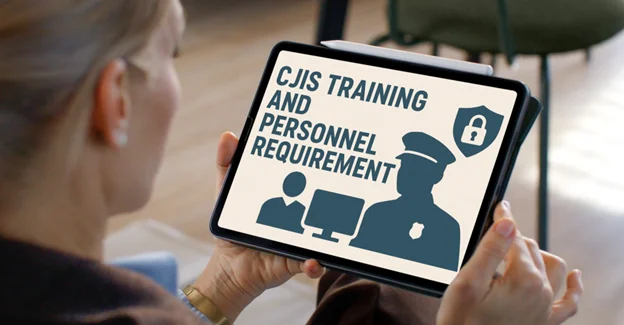
CJIS Training and Personnel Requirements
The proper conduct of personnel oversight is one of the most critical components in CJIS compliance, as it minimizes the risk of accidental or malicious data exposure.
For this reason, agencies need to conduct their respective CJIS Security Awareness Training for all personnel before they’re given access to CJI.
- Security Awareness Training: This training must be completed at least once every two years. It covers the agency’s policies, physical security measures, and the importance of data protection.
- Background Checks: All personnel with unescorted access to CJI must undergo a comprehensive background check, which includes fingerprinting and a thorough security clearance.
It’s also important to place a clear emphasis on organizational roles. That said, the CJIS System Officer (CSO) acts as a state-level authority in the interpretation of the policy.
On the other hand, the Terminal Agency Coordinator (TAC) functions as a local agency leader who is responsible for the enforcement of policies. They also ensure compliance and the coordination of audits within their jurisdiction.
Documentation and Auditing
Compliance needs to be meticulously monitored and maintained. That’s why agencies are required to have detailed documentation in order to demonstrate adherence to every facet of the policy.
Key documents include:
- The System Security Plan (SSP) outlines how the agency meets each policy requirement.
- Complete access logs, maintenance records, and CJIS training records.
To prepare for a strict, extensive FBI CJIS audit conducted every three years, agencies carry out procedures for self-assessment and regular internal audits.
This approach is necessarily proactive, as it aids in the identification and correction of vulnerabilities before they result in a compliance hitch.
CJIS Roles and Responsibilities
The success of the CJIS program relies on a clear hierarchy of roles:
The member is appointed at the state level. He or she is then responsible for interpreting the CJIS Security Policy and ensuring all participating agencies within the state are compliant.
● Terminal Agency Coordinator (TAC)
The TAC is primarily serving as the point of contact for the local agency. A member is likewise responsible for implementing the Security Policy, which ensures that all users are trained and authorized, and managing the local audit process.
A member bears overall responsibility for the agency’s adherence to the Security Policy.
Resources and Best Practices
To attain the simplification of the demanding task of achieving and maintaining CJIS compliance requirements, agencies are expected to consider leveraging the resources at their disposal and implement the best policies:
- Utilize State Resources: Consult your state CJIS office for local policy interpretations and guidance.
- Maintain a Compliance Checklist: Regularly review a checklist covering key technical controls. Ensure all devices with CJI access utilize FIPS 140-2 validated encryption and set up a robust incident response plan.
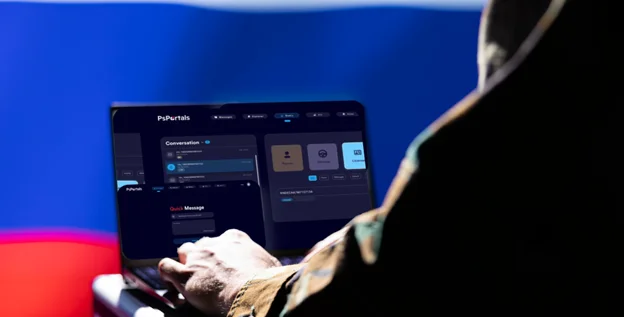
- Choose Compliant Software: Look for solutions that are purpose-built to meet the policy requirements. Law enforcement data security is dramatically simplified by using secure, CJIS-compliant software (such as PsPortals) that automatically handle complex technical requirements like encryption and advanced access control.
PsPortals Solutions
At PSPortals, we understand the critical nature of law enforcement data security. That’s why PsPortals is particularly geared towards simplifying compliance processes and reducing audit stress for law enforcement agencies.
In particular, the entirety of the PsPortals suite, including the Portal XL and Personal Portal, is built with CJIS compliance at its core. For example, Portal XL is certified under the CJIS Security Policy, ensuring only authorized users can access criminal data. You can protect both your agency and the public you serve.
By choosing PSPortals, you gain not just a software solution, but a partner committed to your agency’s security and compliance success.
Frequently Asked Questions about CJIS Compliance
Q: What does CJIS stand for, and what is its purpose?
A: CJIS is an abbreviation for Criminal Justice Information Services. It is the largest division of the FBI, and its primary purpose is to manage the nation’s critical crime-fighting databases. They also establish security standards that ensure the integrity and confidentiality of Criminal Justice Information (CJI) across all law enforcement and justice agencies.
Q: Who needs to comply with CJIS requirements?
A: Agencies that have access, store, or handle the Criminal Justice Information (CJI). This includes all departments of police, sheriff’s offices, court systems, and other government entities that interact with FBI-managed crime data.
Q: What are the key requirements of the CJIS Security Policy?
A: The CJIS Security Policy mandates controls across 13 areas. Key technical and operational requirements include:
- Access Control: It implements Multi-Factor Authentication (MFA) and strong passwords.
- Encryption: It encrypts CJI both in transit and at rest.
- Personnel Security: It mandates background checks and fingerprinting for all personnel with unescorted access to CJI.
- Audit and Accountability: It maintains detailed logs of all system access and user actions.
Q: What training is required for CJIS compliance?
A: A comprehensive CJIS Security Awareness Trainingmust be completed by all personnel who have access to Criminal Justice Information (CJI). This training is mandatory and must be renewed at least once every two years.
Q: How often must an agency undergo a CJIS audit?
A: The FBI CJIS audit typically occurs on a triennial basis or every three years. Agencies are encouraged to perform regular self-assessments and internal audits to ensure continuous compliance.
Q: What is the role of a CJIS System Officer (CSO)?
A: The CJIS System Officer (CSO) is a state-level official responsible for interpreting the CJIS Security Policy. They ensure that all participating agencies within that state are compliant with the policy’s guidelines.
Q: How can agencies stay updated on CJIS policy changes?
A: Law enforcement agencies should consult their State CJIS office for the most current policy interpretations and local guidance. Also, regularly reviewing a compliance checklist and utilizing resources from the FBI CJIS ISO Program can help keep the agency updated.