
CJIS & NCIC Compliance
How to Maintain CJIS Compliance While Switching Portal Providers

CJIS Compliance Doesn’t Pause During a Portal Migration
For agencies planning a system transition, the biggest concern is clear: CJIS compliance during portal migration. The fear is not the switch itself. It’s the possibility of creating a compliance gap while systems are in flux.
CJIS compliance doesn’t pause during migration, even as you’re still setting things up. The same 19 areas of the CJIS Security Policy apply continuously. This holds true whether your agency is on a legacy platform or moving to a new one.
After all, criminal justice information must be protected at every moment, not just when systems are stable.
This means that a CJIS-compliant portal migration isn’t about changing the rules. It’s about sticking to those rules through every phase of the transition. Agencies that succeed treat migration as a controlled compliance event, not just a technical project.
If your team is preparing for a portal vendor switch in law enforcement, the approach should be deliberate. You must get executive buy-in for portal migration, plan for compliance before the first data transfer, enforce it during the migration window, and verify it after cutover. Documentation is not optional as it is the foundation of audit readiness. For a deeper breakdown of baseline expectations, review the full guide to CJIS compliance requirements. This article builds on that foundation with a phase-by-phase approach before, during, and after the switch.
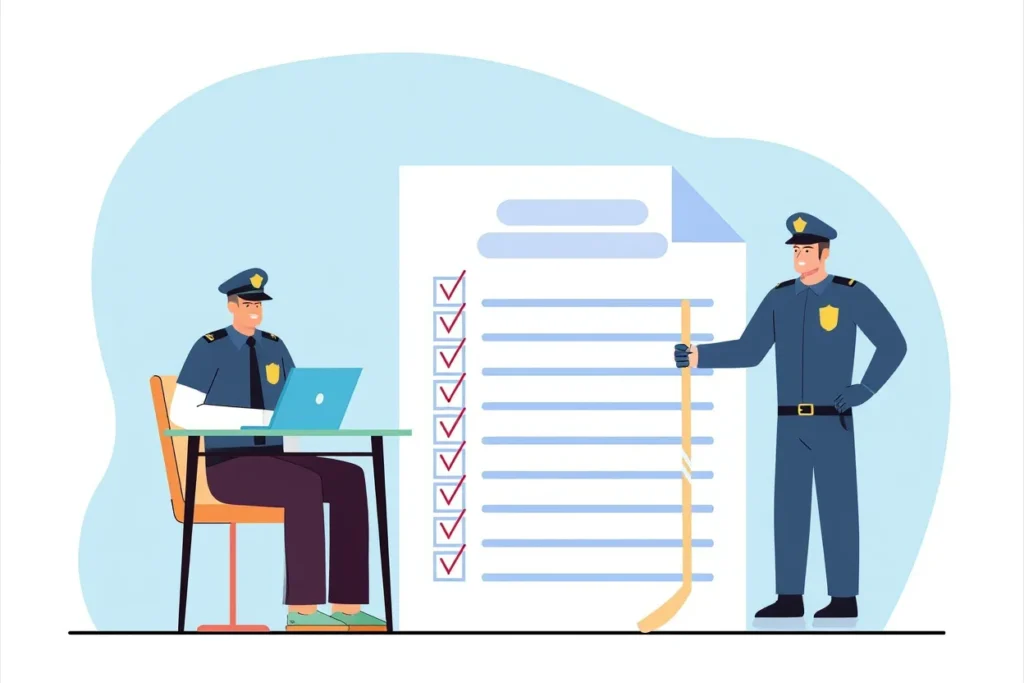
Before the Switch: The Pre-Migration CJIS Compliance Checklist
A successful migration starts long before any data moves. This phase is where most compliance risks can be identified and controlled.
Think of this section as your CJIS compliance checklist.
First, confirm that your new vendor meets all CJIS Security Addendum vendor requirements. They must have a signed CJIS Security Addendum on file. It’s what legally binds them to the FBI’s security standards. Without this, you risk non-compliance and serious consequences.
Next, validate encryption standards. Ensure data encryption at rest meets FIPS requirements. Confirm that all data in transit will be encrypted using CJIS-approved protocols. These are not optional controls. They are baseline requirements.
Additionally, confirm that the new portal is deployed within your agency’s own government-controlled infrastructure. PSPortals Portal XL is agency-hosted, your agency owns and controls the environment, with personnel authorized under CJIS guidelines managing access.
This will include verifying where servers are physically located and seeing to it that any personnel with access to those systems are authorized under CJIS guidelines. Hosting location is not just a technical detail. It is a compliance requirement that must be documented before migration begins.
User access is another critical area. Your existing identity and access management policy must be mapped in full. Every user role, permission level, and access group must be documented and recreated in the new system. This includes administrators, dispatch personnel, and officers accessing criminal justice information.
You also need to preserve your audit baseline. Export and archive the current system’s audit logs. These records form the starting point of your migration audit trail.
Engage leadership early. Talk to your chief, sheriff, and operations commanders about the changes and their effect on your daily operations, so you can coordinate everyone in the agency.
The CJIS Systems Officer must also be briefed on the migration plan, timeline, and compliance safeguards. Their approval is required before any transition begins.
Finally, evaluate vendor readiness using a structured portal vendor switch checklist.
This phase is not about speed. It is about certainty. Every control verified here reduces risk later.

During the Switch: Protecting CJI in the Transition Window
The migration phase is where compliance is most vulnerable. Systems overlap, data moves, and users begin transitioning. Without careful control, gaps can appear.
The priority here is clear: how to protect data in transit.
All data transfers must be encrypted end-to-end. A CJIS-compliant data migration process ensures that criminal justice information is never exposed during transfer. This includes backups, exports, and live synchronization between systems.
Most agencies operate in a parallel-running CJIS systems model during migration. The legacy system remains active while the new portal is validated. This introduces a dual compliance responsibility. Both systems must meet CJIS standards simultaneously.
Audit logging must remain uninterrupted. A complete CJIS audit trail during migration requires both platforms to record activity in real time. Every login, query, and data access event must be captured.
At some point, you also have to stop looking at security settings and ask a simple question: Does the system actually work?
Before cutting over, run NCIC and NLETS queries in the new system and see if they line up with what the old one returns. Not just close enough, but exact where it matters. This is where small inconsistencies show up, and those can turn into real problems if they go unnoticed.
So you test, compare, fix anything that feels off, then test again. Only when everything checks out does it make sense to move forward. The CJIS Systems Officer signs off at that point, not just because the system is secure, but because it is proven to work the way your team expects it to.
Authentication controls must also be enforced immediately. Multi-factor authentication should be active in the new system from the first user login. For more on access controls, review CJIS-compliant authentication.
During this phase, TACs and compliance leads should document:
- Encrypted transfer verification logs
- User access validation in the new system
- Parallel system activity records
- System testing results for NCIC and NLETS queries
- Authentication enforcement checks
This is where law enforcement data protection practices are tested in real time. A controlled migration is documented at every step.

Audit Continuity: The Compliance Gap Nobody Plans For
The most common failure point in a migration is not encryption or access control. It’s audit continuity.
A CJIS compliance audit doesn’t only evaluate current controls. It also examines historical evidence. If there is a gap in your audit trail, even a short one, it raises questions about compliance during that window.
Providing a comprehensive CJIS audit trail during migration is where many agencies struggle. When one system is retired and another takes over, logs can become fragmented or incomplete.
Understanding compliance vs audit is critical. Compliance means your controls are active and enforced. Audit readiness means you can prove that enforcement with documented evidence.
A fragmented audit trail undermines that proof.
Centralized logging reduces this risk. A browser-based platform that records all activity in one place from the first login simplifies audit continuity. There is no need to reconcile logs across multiple systems after the fact.
For a deeper look at audit expectations, review this guide about CJIS compliance audit.
Talk to a Compliance Specialist
Planning a portal switch? Walk through the CJIS compliance checklist with the PsPortals team and see how Portal XL’s architecture maintains compliance continuity throughout the migration.
Start the Conversation
After the Switch: Post-Migration Compliance Verification
Once the new system is live, the work still isn’t over. You’re just entering a new phase where you try to stabilize the new system throughout your agency.
This phase is all about protecting your CJIS compliance after the portal change and making sure no risk lingers.
Start with a thorough review of CJIS policy requirements to confirm everything carries over cleanly. Then, double-check user access. Roles, permissions, and access levels should mirror your pre-migration records.
Any discrepancies must be corrected immediately. Small gaps can turn into bigger problems if left unchecked.
Documentation is essential here. When considering what to document during law enforcement portal migration, include:
- Final audit logs from both systems
- User access validation reports
- Data transfer records
- CSO approval documentation
- Migration timeline summary
Deliver the complete audit package to the CJIS Systems Officer, so they have full visibility of the transition and confirm that it complies with the CJIS Security Policy.
Finally, decommission the old system properly. If it stored criminal justice information locally, it must be sanitized according to CJIS standards.
Post-migration is where compliance is confirmed and preserved.

Why Zero-Footprint Architecture Simplifies CJIS-Compliant Migration
Architecture plays a major role in how complex a migration becomes.
A zero-footprint CJIS migration, for instance, takes a lot of the usual risks associated with traditional systems off the table.
Because zero-footprint architecture, like that of PsPortals requires no data to live on user devices, you don’t have to worry about endpoint cleanup when retiring old systems.
Browser-based platforms also centralize audit logging. Every action is documented in a unified system from the very start, which supports audit continuity.
Authentication stays consistent across devices, too, so you’re not juggling different configurations or versions that could create compliance gaps.
These design choices reduce the burden on IT teams during migration. They do not change CJIS requirements themselves, but the way you meet them becomes far more manageable and a lot less stressful.
See Portal XL Compliance by Design
See how Portal XL maintains CJIS compliance by design — with zero-footprint deployment, centralized audit logging, and built-in encryption. Schedule a live demo with the PsPortals team.
Book a DemoFrequently Asked Questions
Does changing portal vendors affect CJIS compliance?
No, it doesn’t. CJIS requirements stay exactly the same when switching vendors. What really matters is whether the new system meets every requirement and that compliance is maintained, verified, and clearly documented at every step of the transition.
What should agencies verify about a new vendor’s CJIS compliance before migrating?
Confirm the vendor meets CJIS Security Addendum vendor requirements, uses FIPS-validated encryption, hosts data in approved environments, provides audit-ready documentation, and offers 24/7 support for law enforcement operations.
What documentation is needed during a portal migration for CJIS compliance?
You’ll need to document audit logs, user role mapping, encrypted transfer records, parallel system documentation, audit trail exports from both old and new systems, and the CSO’s approval on the migration timeline and completion.
How does audit logging work during a portal migration?
Both systems must maintain logs during the parallel run period. After the cutover, the new system captures all activity. Combined logs should be preserved and delivered to the CSO as part of the migration documentation.
Who approves a portal migration in a law enforcement agency?
The CJIS Systems Officer and command staff typically approve the migration. The TAC manages execution, but the CSO confirms compliance before the new system processes CJI.
What is the difference between compliance and audit readiness during migration?
Compliance means the agency is meeting CJIS requirements at all times during the transition. Audit readiness means the agency can prove that compliance through documented evidence. Both are required, but the documentation gap is where most agencies stumble during migration.