

The CVE database publishes a known vulnerability on Monday. Attackers’ automated scanners detect the vulnerability by Tuesday. On Wednesday, your vendor provides the software patch.
But the issue hasn’t been resolved just yet. Your IT team then organizes its update schedule during the upcoming maintenance window. But that’s still two weeks away because individually updating installed software across 40 workstations in the midst of an active shift requires careful planning.
However, that two-week gap is more than enough time for attackers to infiltrate your system.
This narrative doesn’t show incompetence or negligence. In fact, most law enforcement IT teams strive to do the most with what they have. The real root cause of patch management vulnerabilities in law enforcement is installed software architecture.
Because they operate locally on every single endpoint device, rapid and consistent patching becomes structurally difficult, especially in a 24/7, high-stakes environment.
This article explains why the gap caused by installed software persists and how a different platform solution can solve the existing problem.
If you’ve ever wondered why law enforcement agencies are vulnerable to cyberattacks despite their best efforts, this is where you can find the answer.

Why Patching Feels Like a Full-Time Job You Never Have Time For
If you’re an IT manager at a law enforcement agency, you’ve probably felt the delay of security patches. But this isn’t out of indifference. It’s only because you manage risk thoughtfully that you have to carefully evaluate the best course of action.
A bad deployment that fails during an active shift results in officers losing their access to mission-critical systems. As such, there’s much to do when sending out security updates.
You’ll have to coordinate installed software on every endpoint device, including individual workstations, patrol laptops, mobile phones, and shared terminals.
Updates must also undergo testing before their release to avoid compatibility issues with existing agency systems and network configurations.
Moreover, many agencies operate 24 hours a day, leaving no “after-hours” leeway so you can roll out updates without causing disruptions. You need to maintain systems at all times, which makes it tricky to create maintenance schedules.
For IT teams at smaller agencies with only one or two personnel, the responsibilities are even heavier. You’ll have to juggle everything, from CJIS compliance to network security, password resets, and vendor coordination.
All that combined makes patching installed software consume all your time, while leaving very little margin for error.
The Window Between Vulnerability and Patch Is Where Agencies Get Hit
The term “patch window” refers to the gap between the moment security experts identify a vulnerability and the time a corresponding patch is successfully deployed to all system endpoints.
For installed software in law enforcement environments, that window remains open often for weeks or even months.
This opening is exactly what attackers target. Using automated and fast searches, they scan for systems that operate with vulnerable software versions.
Let’s look at a real-world case to put things into perspective.
Back in September 2025, Cybersecurity and Infrastructure Security Agency (CISA) disclosed a federal agency breach that occurred through a GeoServer vulnerability.
The vulnerability was flagged, and the patch was available. However, the federal agency had not applied it in time, which allowed attackers to breach the system.
As a result, the CISA pointed to delayed patching as the primary point of failure. They also consequently advised that federal, state, and local agencies learn from this incident and promptly roll out security patches.
This is especially true for municipalities and public safety agencies, as ransomware attackers specifically target them due to slow patching cycles.
The question is not whether attackers will find the gap in your installed software, but when. Attackers already possess automated tools that can quickly discover such vulnerabilities.
Law enforcement agencies should direct their attention toward unpatched portals because those portals enable criminals to gain unauthorized access to sensitive information.
By the Numbers
Ransomware attacks against government entities, which include public safety and municipal agencies, experienced a threefold increase in year-over-year attacks. It rose from 95 incidents to 322 between April 2024 and April 2025. In most cases, the entry point was a known, patchable vulnerability that had not yet been addressed. The patch existed, but the window was still open.
What CJIS Actually Requires Around Patch Management
Many IT managers know they have a patching problem. Fewer fully understand that the issue extends to compliance with CJIS patch management requirements.
The FBI’s CJIS Security Policy requires agencies to mandate configuration management controls that include the implementation of security patches without delays.
In addition, you must also establish rules to maintain and document configuration baselines. Any system that operates with an unpatched version breaks the established baseline standards.
You also need to identify vulnerabilities, and the systems you’re managing should receive security patches promptly. The sooner the better, and not two months later when the vulnerability may have already been exploited.
CJIS auditors assess patch posture during compliance checks. If your agency is still using unpatched devices and systems, the auditors will report it as a non-compliance finding.
Agencies that fail a CJIS audit risk losing their access to the National Crime Information Center (NCIC) database, spelling operational disaster and erosion of public trust.
Before your next audit, run a patch status report on every endpoint accessing criminal justice data. Any device more than one version behind is a potential finding. Document your remediation plan with clear timelines, ownership, and validation before the auditor asks.
The Installed Software Problem Nobody Talks About
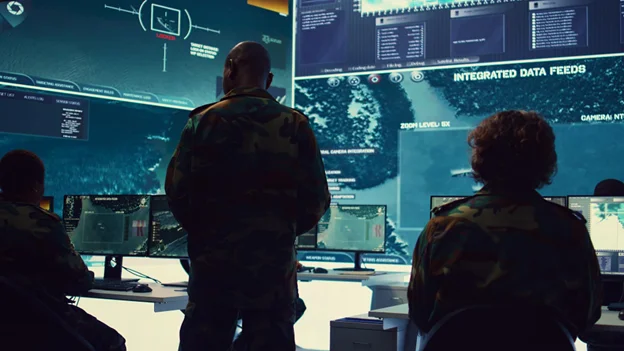
Installed portal patching problems stem from its architectural design, which inherently requires IT teams to conduct manual patching for all devices.
There are no shortcuts available for this process. Every endpoint is a separate task, a separate risk, and a separate opportunity for something to go wrong.
If your agency is using twenty workstations, that’s also twenty patching tasks and the same amount of opportunities for a version mismatch and configuration drift.
When this happens, you may find later on that you’re using three separate software versions at the same time because not all devices received the update.
This is how unpatched portals expose law enforcement agencies to security gaps and compliance risks that arise from version inconsistencies across endpoints.
These failed patches that are not caught quickly leave devices running the old, vulnerable version, while the IT team thinks everything is current. It’s like accidentally leaving your door open at night, making you an easy target for intruders.
If you feel like you’re doing the most, and yet you still end up with criminal justice software patch management failures, then it may not be due to a lack of effort or resources. You’re probably already working late trying to close these gaps.
Take a look back. Your installed software architecture that your agency’s locked into might be the real problem.

How Browser-Based Portals Remove the Patch Problem Entirely
The evidence points to a structural issue: patching challenges often stem from architectural design choices.
If locally installed software creates operational and compliance strain, what’s the alternative? For many agencies, browser-based platforms offer a more manageable model.
Unlike traditional installed applications, browser-based platforms centralize updates at the server level. This requires no manual endpoint patching because no software is locally installed on any device.
Security updates become active for all users as soon as they’re released. You won’t have to worry about maintenance windows, endpoint collaboration, and version inconsistencies.
Many browser-based platforms also follow a zero-footprint architecture, getting rid of local software installation and its weaknesses that attackers can exploit.
This is an architectural difference that shrinks patch management complexity, security vulnerabilities, and risk of non-compliance.
Platforms like PsPortals operate through this browser-based system with zero-footprint security. Your agency can access NCIC, Nlets, and state databases through a secure browser. It doesn’t require any local software installation, just server-side updates, so your IT team can minimize patching responsibilities.
Signs Your Agency’s Patch Management Is Already Behind
Not sure what your agency’s position is? Here is a quick checklist so that you can see for yourself.
These are the warning signs that your patch management needs an upgrade:
1. You can’t tell right away what version of your portal software is running on each device.
2. It took more than two weeks for your last patch to go from being released to being fully deployed.
3. You missed or put off a patch because it didn’t fit with the shift schedule.
4. Your vendor hasn’t proactively told you about a security update in the last 90 days.
5. Your vendor has never shown you their patch deployment process or timeline.
If three or more of these conditions already exist, then the gap is likely already there. That gap may turn into the consequences of patch management failure. And in a law enforcement environment, this means vulnerability to ransomware attacks, data breaches, and operational downtime.
The risk of a security breach or a CJIS audit failure increases with each passing day that the gap remains open.
What IT Managers Should Be Asking Their Vendor Right Now
You can’t fix the architecture and patch vulnerabilities in one night. But you can start asking the right questions right now.
Every IT manager in charge of managing patches for criminal justice software should ask the following questions:
1. Ask your vendor for their patch release timelines.
How quickly do they release security patches after a CVE is published? What is their Service Level Agreement (SLA) for fixing serious security holes?
2. Ask how patches are deployed.
Are updates automatically sent to endpoints, or does your team have to do it by hand?
3. Ask what your current patch posture is.
Can your vendor tell you right now what version each endpoint is using? If not, that’s a problem.
4. Ask what happens if a patch breaks something.
What’s their rollback plan? How long will it take to fix the problem?
5. Ask how they handle CJIS configuration management compliance.
Do they provide you with the documentation you need to get ready for your FBI CJIS audit? Are there references from other agencies?
A good vendor will walk you through all these questions, helping you be more confident with your current law enforcement software. However, if your vendor can’t answer these questions clearly and quickly, that’s a red flag.
What a Well-Managed Patch Process Actually Looks Like
We’ve talked about installed software patching failures and how it puts more burden on your IT team than is desired. But what does an effective software security update for police agencies look like?
- Critical patches are released within 48 to 72 hours after a CVE is made public.
- Deployment that happens automatically and doesn’t need IT intervention at the endpoint level.
- Full patch visibility, allowing your team to always know what version of the software each user is using.
- Auto-generated audit-ready documentation gathered right after any patch, and not put together manually before each FBI CJIS audit.
- A vendor who proactively notifies you of vulnerabilities before you discover them yourself.
Agencies that use browser-based platforms like PsPortals say that patching is no longer a scheduled event that takes weeks to complete. With updates automatically deployed at the platform level, your IT team doesn’t have to coordinate installations across individual devices.
Closing the Patch Window for Good
The problem with law enforcement patch management vulnerability continues to exist because the underlying architecture hasn’t changed.
As long as your agency uses installed software, your IT team will be managing patch windows, manually coordinating deployments across shifts, and hoping they don’t miss anything in the process.
And that’s not your IT team’s fault. That’s just how installed software architecture works.
Now it’s time to ask yourself. Do you want to continue managing that system? Or is it finally time to choose an automated system that manages patching itself?
If the signs in this article seem familiar, it’s worth checking out what the other option looks like and how it makes a difference.
Take the Stress Out of Patch Management for Your Agency’s IT Team
See how PsPortals eliminates the patch window problem entirely, no maintenance windows, no endpoint coordination, no version mismatches.
Request a Free DemoCJIS-compliant · Browser-based · No installation required