
The law enforcement agents securely access the crime databases through the CJIS-compliant systems. These systems utilize multi-layered security processes such as, encryption, and limited access controls. The law enforcement agents are able to access the crime databases such as NCIC, NLETS, and State Repositories through these systems without disclosing any confidential information.
Each day, the police are reliant on a safe and secure method of accessing the databases in order to address the safety of officers, and maintain the trust of the general publiccalls, stopping traffic, and investigating crimes are in need of rapid and secure access to the data. Meanwhile, agencies are under pressure to protect Criminal Justice Information (CJI) from being used improperly, leaked, or accessed without authorization.
The security of police databases is built up with several layers of protection. The process of authentication verifies the identity of the user, data encryption protects the data both in transit and when it is stored, audit logging ensures that there is accountability, and access control based on the user’s role limits the permissions of the user.
More and more, agencies are opting for the new browser-based zero-footprint systems that do not store data locally, thus reducing the risk of potential exposures and making compliance easier. In this article, we will discuss the process of the police ensuring the secure retrieval of the criminal database, police process workflows, as well as how tools like PsPortal make this retrieval secure and scalable.
Critical Criminal Databases Law Enforcement Queries Daily
NCIC (National Crime Information Center)
The FBI operates the NCIC, one of modern policing’s most critical tools. The records on the NCIC include active warrants, stolen vehicles and firearms, missing persons, criminal histories, sex offender data, and gang files.
For instance, a police officer making a traffic stop could run a license plate through NCIC and discover that a vehicle has been reported stolen, or that the registered owner has an outstanding warrant. As noted, access to NCIC is tightly controlled; only FBI-trained operators are allowed to conduct queries, and all access must be in conformity with CJIS security policy.
NLETS (National Law Enforcement Telecommunications System)
NLETS is an Interstate Justice Network that securely connects all 50 states, U.S. territories, and federal agencies. It provides an avenue for officers to access DMV records, driver’s license data, vehicle registrations, and interstate law enforcement messaging.
A common use case is checking the validity of an out-of-state driver’s license during a traffic stop. Instead of manually contacting another state, officers can query NLETS through a single system. It saves time because interoperability increases officer safety.
State Criminal Databases
Each state maintains its own records of criminal justice information, which may include state warrants, criminal history records, sex offenders, and probation/parole records. The files may also be utilized by the detectives in their search to reconstruct case files or verify the legal status of the suspect.
Local and County Databases
The municipal and county levels maintain local warrants, arrested persons, field interviews, and gang intelligence. The information can be searched through Records Management Systems (RMS) or Computer-Aided Dispatch systems.
Police officers typically search several databases concurrently. Each second is precious in time-sensitive events like traffic stops or active calls. Effective security measures of law enforcement databases prevent such efficiency from negatively affecting public security and personal anonymity.
Database Access Infrastructure vs. Records Management Systems
The database access infrastructure refers to the secure interface between the user and the NCIC, NLETS, and state criminal record databases. At this level are functions relating to authentication, encryption, and the compliance and routing of CJIS. These types of systems represent the level at which systems such as PsPortal’s Portal XL exist.
RMS, CAD, and case management systems are not alike. These systems hold reports, incidents, and workflow information, and they function in conjunction with the database access infrastructure rather than replacing it.
This separation exists for a reason because accessing criminal databases requires FBI certification, strict security controls, and specialized interoperability protocols. General software platforms are not designed to meet these requirements on their own.
Traditional vs. Modern Architecture
Traditionally installed software requires applications to be installed on each workstation or mobile data terminal. These systems often cache data locally, require per-device updates, and increase endpoint risk.
Modern browser-based, zero-footprint systems do not require any software-based installation on the local machine. They log in via a secure browser session, with no CJI retained within the user’s machine.
Everything from upgrades to security functions can be centrally maintained, which minimizes both costs and threats. With architecture playing an integral role in determining overall security, a zero-footprint system prevents vulnerabilities from locally stored data, thereby ensuring continued ease of accessibility.
Multi-Factor Authentication and Access Control for Database Queries
Multi-Factor Authentication (MFA)
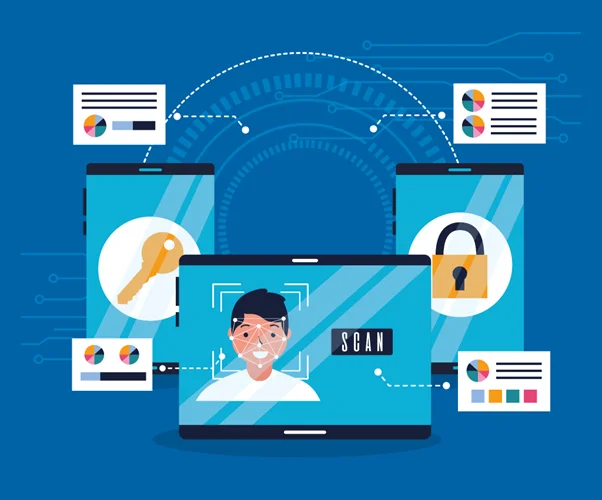
CJIS requires multi-factor authentication for access to criminal justice systems. This typically combines a password with a second factor such as a smart card, authentication token, mobile app, or biometric.
For example, a dispatcher may log in at the start of a shift using a password and a smart card. Even with the possibility of hacking passwords, without the second factor, entry cannot be made.
NCIC Operator Certification
Only authorized operators are allowed access to NCIC. It takes training, testing, and recertification for someone to be certified. The system ensures that only certified operators are allowed access through automatic blocking of unauthorized users.
The Testing & Certification component of PsPortal tracks the certification status and expiration dates of the operators.
Role-Based Access Control (RBAC)
The system provides access based on job function: patrol officers can run basic queries, dispatchers may have broader access, and configuration tasks are handled by administrators. That is how the security best practice for a police database is assured users are only able to access what they need to perform their job.
Audit Logging and Accountability
Every query is recorded with the user ID, the date and time, the accessed database, as well as the queries being made. This discourages misuse and protects civil rights by creating accountability.
Background Checks
Before gaining access to Criminal Justice Information (CJI), all users must pass a fingerprint-based FBI background check. This requirement applies to officers, dispatchers, IT personnel, and approved contractors.
Session Management
Systems automatically log out users after 15–30 minutes of inactivity. This blocks unauthorized access should an officer step away from a workstation or mobile device.
Encryption Standards Protecting Criminal Database Access
Encryption in Transit (Database Queries)
All queries sent to databases like NCIC, NLETS, and state repositories shall be encrypted using TLS 1.2 or higher; TLS 1.3 is preferred. This, in turn, ensures that any data, such as a license plate query or warrant information, is transmitted securely among patrol vehicles and dispatch centers to database servers.
For example, this means that if an officer runs an NCIC query from his laptop, via a mobile data terminal, that information is encrypted as it travels from one point to another, making interception by unauthorized parties impossible.
Encryption at Rest (Stored Data)
Even the date stored on the servers in the form of logs, cache, or backups is encrypted with AES-256. Also, zero-footprint browser interfaces such as PsPortal offer more security as nothing is stored locally that is considered CJI.
Mobile Device Encryption
Laptops, tablets, and smartphones accessing CJI must use full-disk encryption. For instance, were a laptop from a patrol car to be stolen, encryption will lock out anyone without authorization. Secondly, zero-footprint solutions will limit risks to endpoints by ensuring that a personal CJI copy is never stored on that machine.
Key Management and Operational Transparency
The encryption keys used are kept quite separate from the data, with regular rotation so that if the data gets compromised, the keys will be secure. The encryption occurs in the background, allowing the officers to easily access the crime databases.
Detailed Audit Logging: Accountability for Every Query
Audit logging is one of the most important elements of law enforcement’s secure data management.
What Gets Logged (Every Query)
Each query logs the user’s identity, timestamp, accessed database, query details, results returned, device vehicle ID, and associated case or CAD number.
Why Comprehensive Logging Matters
Accountability and Civil Rights
Comprehensive logging prevents unauthorized access by creating a history of all requests with the ability to automatically detect potential unauthorized activity while securing liberty with accountability.
Security and Threat Detection
Audit logs enable the detection of hacked accounts and internal threats through unusual access behavior, generating alerts for instant managerial attention.
CJIS Compliance
CJIS audits necessitate that access records are tamper-proof and maintained for a period no less than one year, although many states now require longer retention periods to keep in compliance and ensure database access.
Automatic vs. Manual Logging
Automatic logging in modern systems records every query without user action, unlike manual logging, which is incomplete, error-prone, and difficult to audit.
Log Analysis
Anomalies are detected quickly by automated tools and monitoring views so that safe law enforcement data management and log exportations for audits in CJIS can occur in an instant.
Operational Workflows: Real-World Secure Database Access Scenarios
Scenario 1: Dispatcher During a 911 Call
A caller to 911 reports a suspicious vehicle and gives its license plate. At the beginning of the shift, the dispatcher authenticates with MFA (password + smart card). In the call, the dispatcher enters the license plate directly into Portal XL to query NCIC and state databases.
The system checks the NCIC certification of the dispatcher before issuing the query; the query is then encrypted with TLS 1.3 and transmitted to NCIC and to the state DMV. The results indicate that the vehicle is not stolen, but the registered owner has an outstanding warrant. The query is automatically logged, and the responding officers are alerted.
Scenario 2: Officer During a Traffic Stop
The police officer pulls over a speeding vehicle and is required to confirm the driver’s license and determine if any outstanding warrants exist. The officer begins their shift by logging onto the MDT with a password and a fingerprint scan. The license number is entered, and queries for warrants in NCIC, license verification through NLETS, and the state DMV are conducted securely.
The query results, which include a valid license, registered vehicle, and outstanding misdemeanor warrant, are encrypted and recorded with officer identification, date and time, query databases and results, patrol car ID, and GPS coordinates. The officer makes an arrest, and biometric login, mobile encryption, zero-footprint access, automatic timeout, and GPS logging ensure secure data.
Scenario 3: Detective Investigation
A detective looking for information about a burglary pattern would want access to criminal records, records for stolen goods, and information about cars. MFA (password, then authentication from a mobile phone-based app) makes it possible for a detective to, from a web-browser interface (such as Portal XL), access criminal databases without having their own computer-based software installed.
Even web queries processed via NCIC/NLETS are encrypted for secure display in a web browser, without caching, along with automatic entry into a unique case number for every query, complete security for queries accessed from authorized remote locations via VPN with CJIS-compliant controls
PsPortal: Purpose-Built Secure Infrastructure for Criminal Database Access
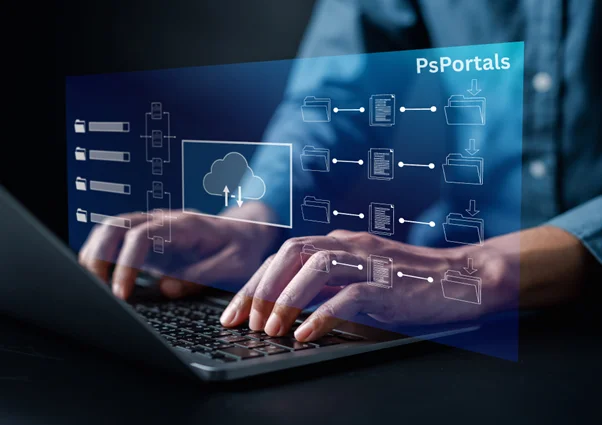
PsPortal is a secure database access infrastructure targeted towards the law enforcement community, with over 30 years of experience serving law enforcement officials and dispatchers for NCIC, NLETS, and state criminal databases. Unlike RMS and CAD, PsPortal doesn’t compete with the platforms but allows the platforms to securely access important databases while ensuring CJIS compliance. The zero-footprint, browser-based architecture of PsPortal gives the product a critical security advantage over traditional packaged software.
The Zero-Footprint Security Advantage
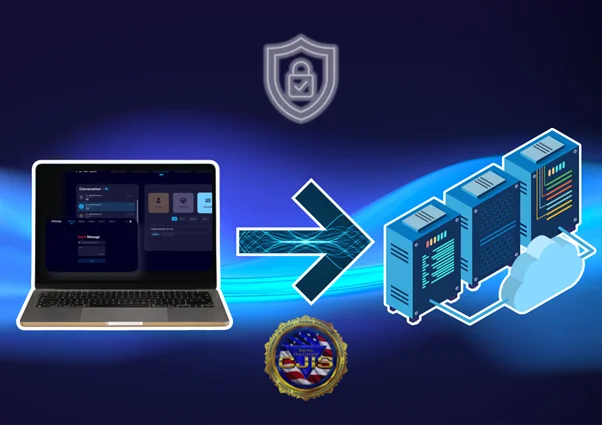
PsPortal’s Portal XL allows users to access databases through a browser without installing software locally. There is no Criminal Justice Information (CJI) on any device; searches and retrievals stay at agency-controlled servers. Devices function as windows for viewing, not storage sites.
Why This Dramatically Enhances Security
Eliminated Local Data Exposure: Traditional software installs caching local queries, such that any stolen device can reveal CJI. With PsPortal, zero local data is stored—stolen laptops or MDTs contain nothing sensitive.
For example, if a patrol vehicle is broken into, traditional software could expose cached NCIC queries and warrant information, creating a major breach and CJIS violation. PsPortal prevents this entirely, allowing operations to continue securely.
Ransomware Protection: Workstation ransomware cannot access CJI because all data remains on agency-controlled servers, keeping operations uninterrupted.
Simplified Endpoint Security: Centralized security protects all users at once, instead of securing hundreds of individual devices.
CJIS Audit Simplification: Auditors verify the central infrastructure rather than each device, streamlining compliance.
How PsPortal Securely Connects Police to Databases
Portal XL Desktop and Dispatch Access: The NCIC, NLETS, and statewide databases are accessible through a secure browser. There is no requirement for any kind of local installation, patching, or update, and it can be performed on any device, either a desktop or laptop computer, thin client, or ruggedized MDT.
Key Security Controls:
- Multi-Factor Authentication (MFA): Necessary for all access, integration with Active Directory or SSO. For instance, log on with a password and a smart card for the dispatchers.
- NCIC Certification Management: Automatically tracks operator certification and expiration, restricts usage to uncertified operators, and produces audit-ready reports.
- Role-Based Access Control (RBAC): Defines specific roles for patrol officers, dispatchers, detectives, and administrators, and automatically enforces permissions.
- End-to-End Encryption: TLS 1.3 is used to secure queries from browsers to databases. Unencrypted CJI is not stored locally.
- Comprehensive Audit Logging: Every query is automatically logged—user ID, timestamp, database, query details, results, and source. Suspicious activity triggers real-time alerts, ensuring accountability.

Super Administrator: Multi-Agency Database Management
The Super Administrator module in PsPortal allows management across multiple agencies by giving a central overview of every agency within one interface. Every query throughout participating agencies is centrally recorded, ensuring a standardization of audit trails with regular security standards across the county.
This centralized approach optimizes audit efficiency, whereby administrators can check compliance on multiple agencies without having to visit each location individually.
For instance, a county sheriff overseeing eight municipal departments can easily monitor NCIC and NLETS queries, enforce access controls, track operator certifications, and provide unified reports through a single system.
In CJIS audits, a county’s entire database activity can be reviewed rapidly and comprehensively without needing to audit each agency separately, yet it keeps compliance, accountability, and secure law enforcement database management strong across all its jurisdictions.
How PsPortal Addresses Critical Security Challenges
- Stolen Devices: Zero local CJI prevents data breaches.
- Insider Threats: Inappropriate queries are detected through real-time monitoring and automated alerts.
- CJIS Audits: Centralized logs allow instant, audit-ready reports.
- Security Updates: Centralized patches safeguard all the users together in a go.
- NCIC Certification Tracking: Compliance is enforced at the module level, blocking access to non-certified modules.
PsPortal is purpose-built for law enforcement with a zero-footprint design, CJIS compliance, 24/7 reliability, expert support, and proven scalability. PsPortal criminal database access features and PsPortal secure police database software—the best solution for secure criminal database access.
Browser-Based vs. Installed Database Software: Security Comparison
| Aspect | Traditional Installed Software | Browser-Based (Zero-Footprint) |
|---|---|---|
| Architecture | Software installed on each device | Browser access—no local installation |
| Local Data | CJI cached locally (stolen device risk) | Zero local CJI storage |
| Security Management | Per-device security configuration | Centralized security (one system) |
| Updates | IT patches each device individually | Centralized updates—instant for all |
| Ransomware Risk | Local data can be encrypted | No local data to encrypt |
| CJIS Audit | Verify each device individually | Verify the central infrastructure once |
| Endpoint Encryption | Required on all devices | Simplified (no local CJI) |
| Log Management | Logs scattered across devices | Centralized comprehensive logging |
| Theft/Loss Impact | Stolen device = CJI exposure | Stolen device = zero CJI exposure |
| Device Flexibility | Access from devices with installed software | Access from any browser-capable device |
Zero-footprint browser-based technology (example of PsPortal) offers far superior security by removing the attack surface of an installed application. This allows for easy management of compliance and improved security compared to legacy installed software.
By having secretive updating, access restrictions, and monitoring capabilities, PsPortal ensures that police database security guidelines are being adhered to and it offers the best means for obtaining access to a secure criminal database and a secure criminal database software.
Best Practices for Secure Criminal Database Access
- Deploy Zero-Footprint Database Infrastructure – Use the browser-based solution, Portal XL, that maintains no local CJI. This mitigates the risks associated with the locality in terms of security and data breaches.
- Enforce Multi-Factor Authentication Universally – Make MFA a requirement for all database accesses. By its nature, its technical implementation will ensure passwords cannot, by themselves, allow an individual to gain access. Also, the MFA solution should interface with the agency’s identity management systems, like Active Directory or SSO.
- Implement Comprehensive Automatic Audit Logging – All queries should automatically be logged with complete information, such as user ID, timestamp, database name, contents of the query being made, as well as the results obtained.
- Verify and Maintain Encryption Standards – Use at least TLS 1.2; TLS 1.3 is highly recommended for data in motion. For data at rest, encryption with AES-256 is recommended. Regarding mobile devices, full disk encryption should be used to protect sensitive information.
- Implement Role-Based Access Control (RBAC) – Assign roles based on job functions. Provide quarterly access reviews; immediate revocation of credentials when an employee separates.
- Review Audit Logs Regularly – It is recommended that supervisors monitor logs every month or every quarter. Additionally, supervisors must monitor logs to identify problematic queries that require immediate analysis.
- Choose Purpose-Built Secure Infrastructure – Select partners with a strong background in dealing with law enforcement agencies and ensure compliance with CJIS. Go for zero-footprint security architecture over legacy architecture.
Frequently Asked Questions About Secure Police Database Access
How do police access criminal databases securely?
Police use CJIS-compliant systems with MFA, encryption, audit logging, and role-based access controls. These layers work together to protect Criminal Justice Information while allowing fast operational access.
What criminal databases do police access?
Police commonly access NCIC, NLETS, state criminal repositories, and local databases to check warrants, licenses, criminal histories, and stolen property.
What is the best solution for secure criminal database access?
The best solution combines zero-footprint architecture, CJIS compliance, automatic logging, and strong authentication. PsPortal secure police database software is designed specifically for this purpose.
How does zero-footprint architecture improve database security?
The use of zero-footprint architecture enhances security since it eliminates the storage of Criminal Justice Information on local computers, thereby reducing the dangers posed by lost or stolen computers that could be compromised.
How are police database queries logged for accountability?
The queries performed by the police databases are recorded automatically for user identity, date, database, query information, as well as results, consisting of tamper-proof audit trails for accountability purposes as well as for CJIS compliance.
Can police access criminal databases from mobile devices securely?
Yes, police can safely access the database on the mobile device by using the zero-footprint technique with the aid of the mobile application and encrypting the information with MFA, session timeout, and remote wipe.
Secure Database Access: Critical Infrastructure for Modern Law Enforcement
Access to criminal databases is an integral part of modern policing. Police officers cannot make rational decisions about safety without access to the right information. However, they must also ensure the protection of confidential information and respect civil rights.
Security with multiple layers is required, including authentication, encryption, audit logs, access control, and certifications. The architecture is also critical. Zero-footprint browser solutions remain vastly more secure than traditional applications for data storage, as legacy applications are typically client-side.
Purpose-built solutions, such as PsPortal, with extensive experience working with law enforcement, enable law enforcement agencies to address their needs effectively without compromising security. Allows for investment in a secure software solution for criminal database systems.
Audit the current level of secure database access, analyze areas where there may still be exposure to data storage and logging concerns, and then select systems developed for law enforcement with a proven track record.
Modern policing demands modern infrastructure. Secure. Zero footprint. Fully logged. Multi-factor authenticated. And above all, purpose-built for the realities of law enforcement work.